





Source: PANews
Democrats sweep the U.S. midterm elections, reshaping the global technology and industrial landscape.
Democrats won governorships in key states including Texas and Georgia, with some candidates explicitly pledging to impose moratoriums on data center construction. The outcome has cast doubt on the outlook for AI infrastructure expansion—Asian chip stocks fell broadly on Wednesday, U.S. Treasury yields retreated, and the Nasdaq has pulled back roughly 8% over the past month.
For Korean companies, the election results cut both ways. Chipmakers such as Samsung Electronics and SK Hynix worry that tighter data center regulations will weigh on demand for server DRAM and high-bandwidth memory. Meanwhile, solar companies like Hanwha Solutions are hoping to benefit from Democratic efforts to restore clean energy tax credits under the Inflation Reduction Act.
Data Center Backlash Spreads, Tech Stocks Under Pressure
The scale of victories by data center opponents in this midterm cycle caught the market off guard. In Texas—which GLJ Research estimates accounts for about a quarter of U.S. data center capacity expected to come online by 2030—Democrat Gina Hinojosa defeated incumbent Republican Governor Greg Abbott, ending three decades of Republican dominance in the state; fellow Democrat James Talarico also won a Senate seat. In Georgia, where Atlanta is the most active market for data center construction nationwide according to CBRE, Democrat Keisha Lance Bottoms won the governorship, ending more than two decades of Republican rule.
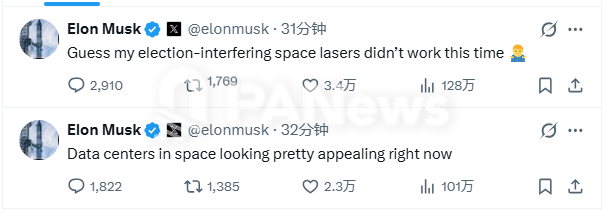
Notably, opposition to data centers is not purely partisan. Critics cite noise pollution, heavy water consumption, staggering electricity use, rising residential power bills, and job and tax contributions that are disproportionate to the incentives state governments have offered. Even some Republicans have turned against such projects. Elon Musk, who donated over $450 million to Republicans this cycle, quipped on social media on election night that "building data centers in space seems pretty attractive."
Aidan Yao, Senior Investment Strategist at the investment research arm of Amundi, Europe's largest asset manager, said: "In our view, this midterm election is more like a referendum on AI than on Trump. If the AI theme faces certain constraints, then the U.S. economy, U.S. inflation, and U.S. monetary policy all become highly uncertain."
Korean Chip Industry: CHIPS Act Subsidies Likely Safe, But New Data Center Rules Loom
For Samsung Electronics and SK Hynix, Democratic control of Congress sends mixed signals. On the positive side, Democrats are positioned to check the Trump administration's attempts to cut CHIPS Act subsidies. The Trump administration has sought to renegotiate subsidy terms finalized during the Biden era, drawing criticism from some Democratic lawmakers. Samsung's subsidy tied to its Taylor, Texas plant investment amounts to $4.745 billion.
However, concerns are mounting over tighter data center oversight. Industry sources say the market's worry is that construction approvals could be tightened on grounds of AI safety, power, and environmental issues, delaying new project launches and ultimately weighing on demand for server DRAM and high-bandwidth memory.
KB Securities analyst Kwon Hee-jin believes tighter regulation will not necessarily translate into shrinking investment. "Data centers have a significant impact on local tax revenue and regional economies, making it difficult for state governments to simply ban construction," he said. "A more likely adjustment would be shifting electricity costs onto data center operators, or requiring them to secure their own power supply before breaking ground." If so, tech giants would have to build their own substations, transmission networks, and power generation facilities—potentially increasing overall infrastructure spending and creating new demand for Korean power equipment manufacturers.
Auto Industry: Tariff Barriers Expected to Hold
The auto industry holds no expectations for policy relief. The 15% tariffs imposed under Section 232 of the Trade Expansion Act fall within executive authority and are expected to remain regardless of which party controls Congress. Cho Sung-dae, head of the trade research division at the Korea International Trade Association, said: "Congressional oversight of policy implementation may intensify somewhat, but a major shift in tariff measures is unlikely." He believes that with Washington continuing to focus on protecting domestic industries and strengthening supply chains, auto tariffs and pressure to expand U.S. production will persist.
That said, Democratic control of Congress could inject new momentum into EV promotion policies, pushing Hyundai Motor and Kia to deepen their electrification push.
Shipbuilding: Cooperation Framework Likely to Continue, But Room Limited
The key variable for shipbuilding is how far the U.S. will allow its naval vessels to be built overseas. The NDAA passed by the House explicitly prohibits funding for combat vessels built at foreign shipyards, while the Senate Armed Services Committee version permits certain non-combat vessels to be built abroad.
Shinhan Securities notes that if the U.S. further tightens restrictions on foreign-built naval vessels, expectations for new orders through MASGA—the "Make American Shipbuilding Great Again" Korea-U.S. shipbuilding cooperation project—would narrow, with opportunities concentrated in maintenance, repair, module supply, and local shipyard work. However, since rebuilding the U.S. shipbuilding industry is a bipartisan consensus and MASGA investment is driven by the executive branch, the industry broadly expects the overall cooperation framework to remain intact.
Renewable Energy: Policy Tailwinds Benefit Korean Companies
The renewable energy sector is the most optimistic about the election outcome. Democrats campaigned on restoring clean energy tax credits under the Inflation Reduction Act, and companies with large U.S. production bases such as Hanwha Solutions are widely seen as beneficiaries. The solar sector is particularly worth watching—Korean companies stand to gain a favorable market position.
Korean Firms Closely Watching Congressional Dynamics as U.S. Operations Expand
Korean companies' sensitivity to shifts in congressional power stems from the sharp rise in the share of their U.S. operations. A survey by corporate data provider CEO Score of overseas subsidiaries of 28 major conglomerates shows that as of end-June this year, the number of U.S. subsidiaries reached 1,308, up 232.0% from 394 a decade earlier, with their share of all overseas subsidiaries jumping from 13.0% to 26.5%.
The number of U.S. subsidiaries under Samsung, SK, Hyundai Motor, LG, and Hanwha rose from 240 to 888 over the same period. Hanwha saw the largest increase—from 63 to 374—driven by its aggressive expansion in solar and energy storage; SK followed, rising from 40 to 243; and Hyundai Motor grew from 55 to 112.