




Source: AI Era
Get ready—OpenAI is about to drop something big!
Just moments ago, they warmed things up with a major upgrade to ChatGPT Images 2.6, boosting image generation speed by a whopping 50%.
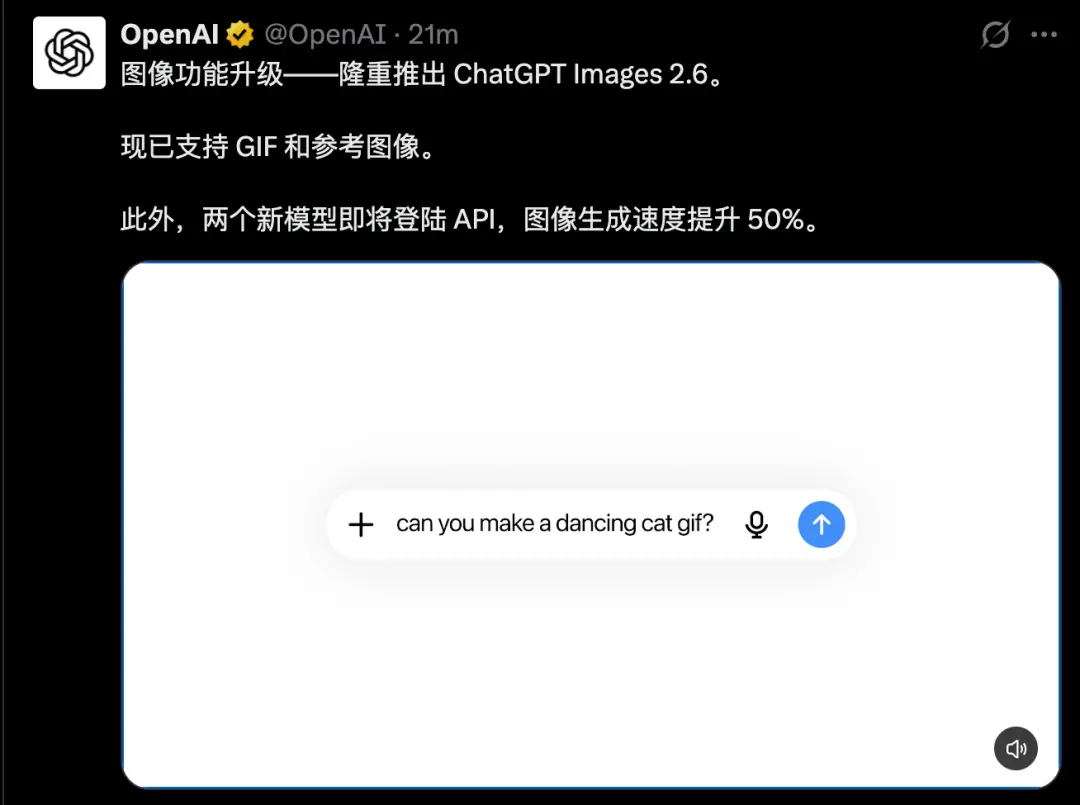
For the first time ever—and an OpenAI first—AI-generated images can now be turned into GIFs with a single click.
That's not all. GPT Images 2.6 also supports frame-by-frame editing, playback speed adjustment, and reference-based image generation.
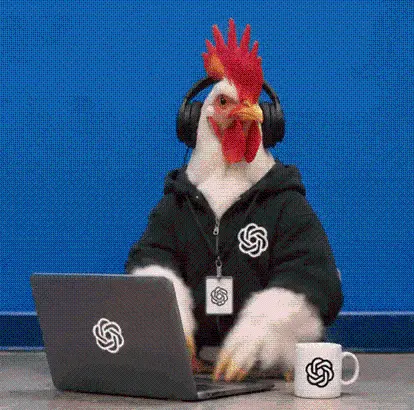
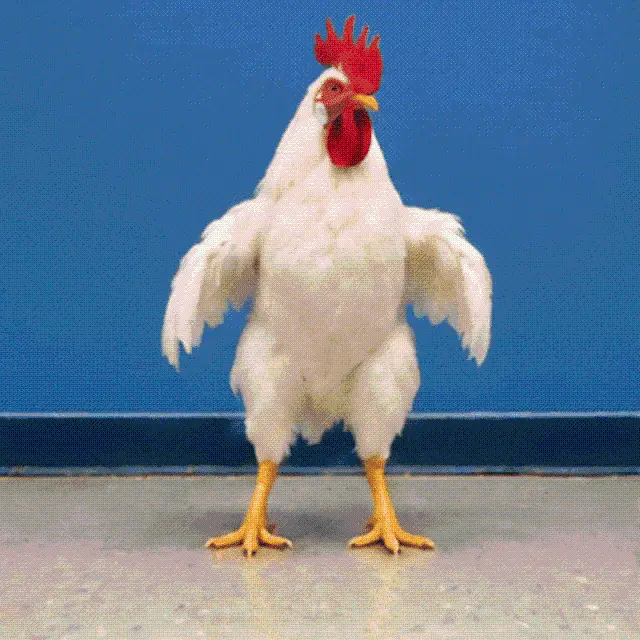
A goofy rooster in a horse stance, once sped up, turns into a full-on dance frenzy.
Today, two new API image generation models—Flare and Sunburst—officially launch.
The former can generate an image in as fast as 6 seconds, while the latter focuses on high quality and editing consistency, with support for SVG export and localized retouching.
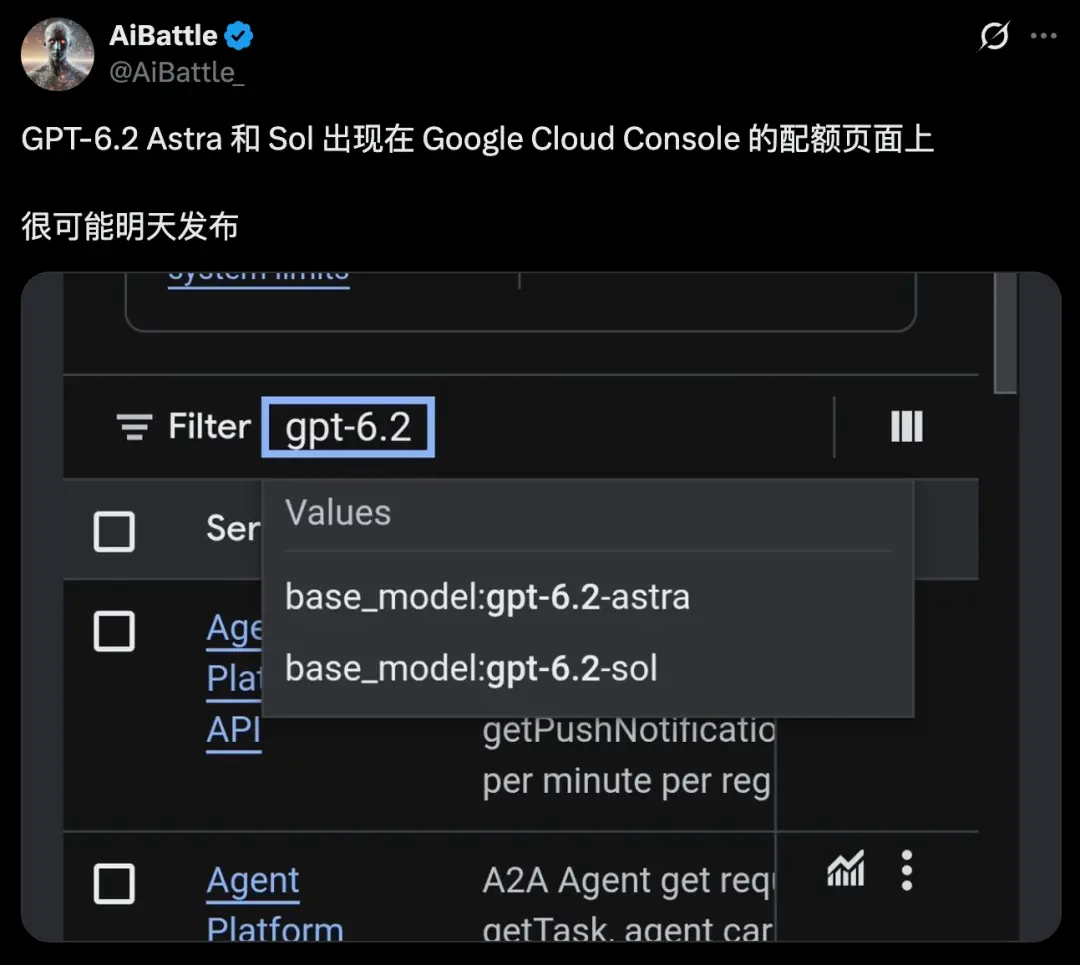
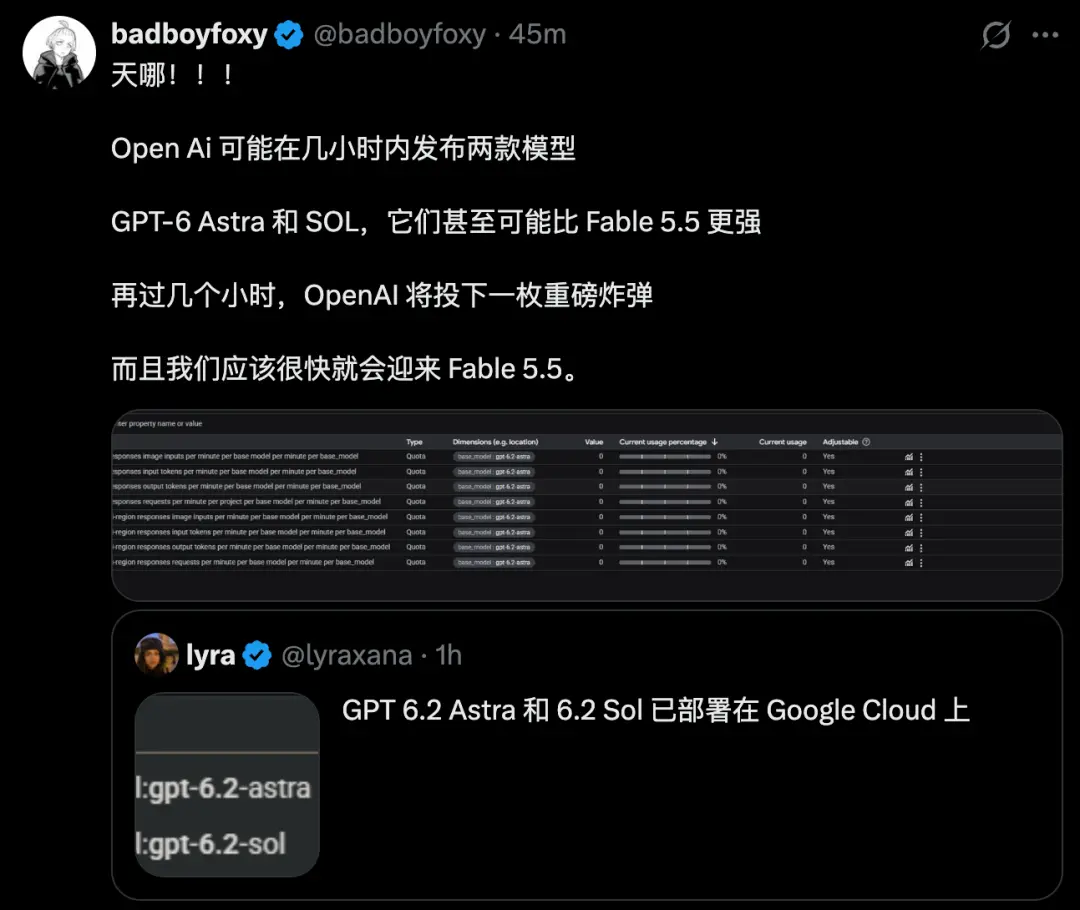
Coincidentally, the next-generation GPT-6.2 Astra and Sol have also appeared on Google's platform, and many in the industry are betting: an official announcement could come as early as tomorrow!
ChatGPT Can Finally Make GIFs—Bring Any Image to Life
UIS1—OpenAI's GPT Images 2.6 upgrade is all about practicality.
In the past, when you asked AI to draw a kitten, you'd typically get a static image.
If you wanted the kitten to dance, blink, or wag its tail, you'd need extra animation software or other generation tools.
This time, ChatGPT handles the entire workflow directly.
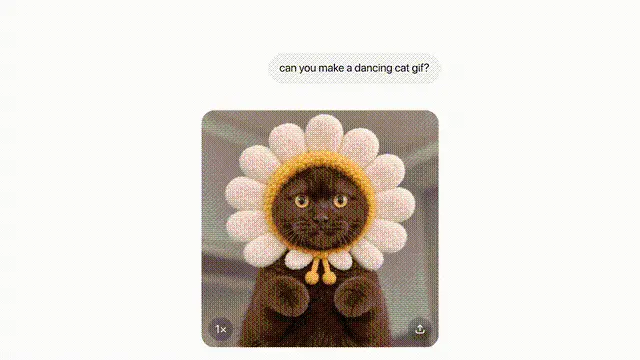
Image generation is no longer monotonous. Want a photo to come alive? Just toss ChatGPT a line: "Can you make this into a GIF?"
In an instant, the subject in the photo comes to life.
A cat wearing a daisy knit hat starts swaying its body on the spot, while a frog under a disco ball, a strutting rooster, and a rabbit on top of a pink sedan all bounce to the beat.
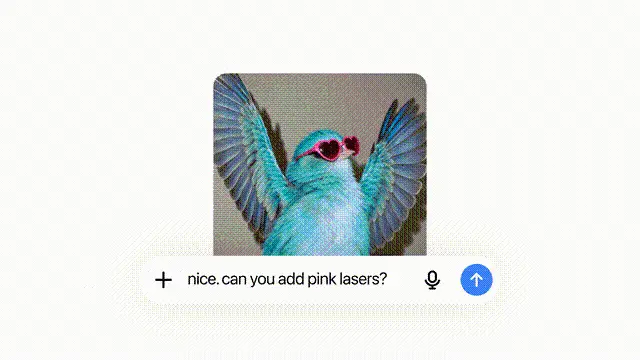
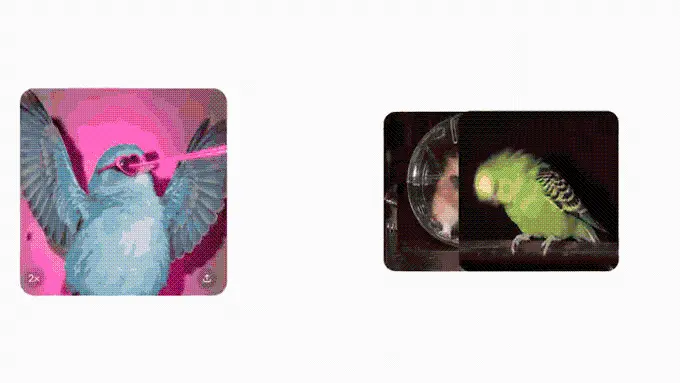
Best of all, after generation you can keep editing—adding lasers to a blue bird and setting it to 2x speed.
The whole point is: just say the word, and the image gets remixed. The most fun part of GPT Images 2.6 is "frame-by-frame editing."
Even casual pet photos from your phone can be turned into dancing GIFs with one click.
Upload photos of your turtle, hamster, and parrot into the chat, and in moments they become a bear cub in a pleated skirt dancing, a Pomeranian winking among rose petals, and a raccoon singing into a microphone.
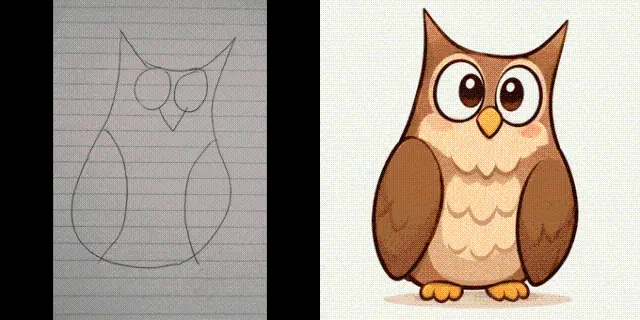
Even a hand-drawn owl sketch sent to ChatGPT instantly grows brown feathers, blinks big eyes, and waves hello.
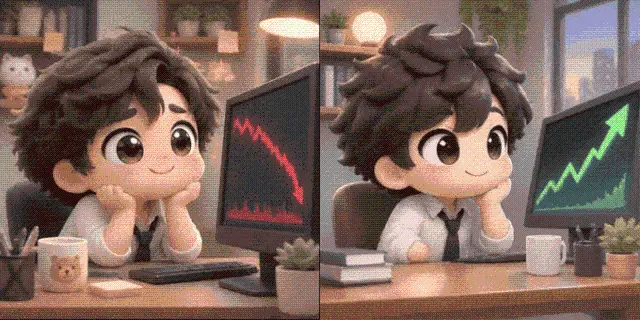
It's also great for making everyday chat stickers.
A chibi office worker—one on the left crying at a plunging red chart, one on the right cheering and throwing money at a rising green chart—these are all automatically assembled into looping GIFs from 6 frames generated by ChatGPT in one go.
Remixing Memes—We Took It for a Spin
Since this is ChatGPT's first foray into GIFs, we couldn't resist giving it a try ourselves.
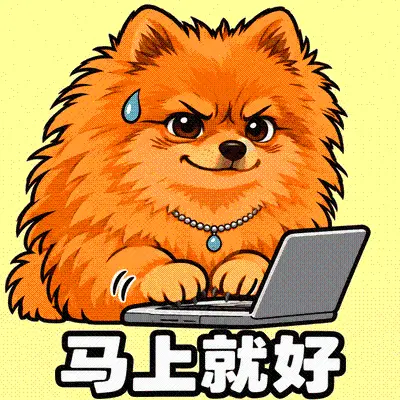
We started with our newly debuted super IP "Super DouDou"—one prompt, and in seconds it whipped up an adorable image of a Pomeranian furiously typing away.
We could even hand-craft stickers, with character features and hair color details staying perfectly consistent.
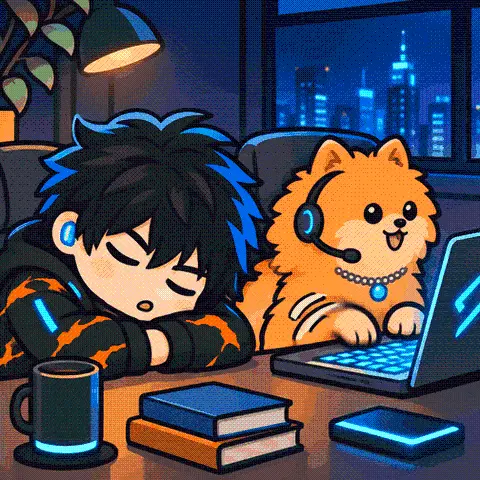
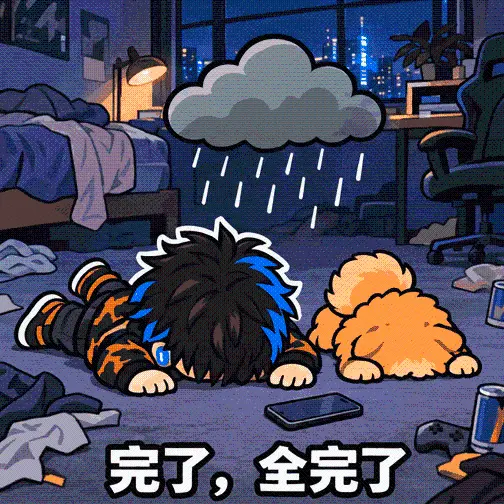
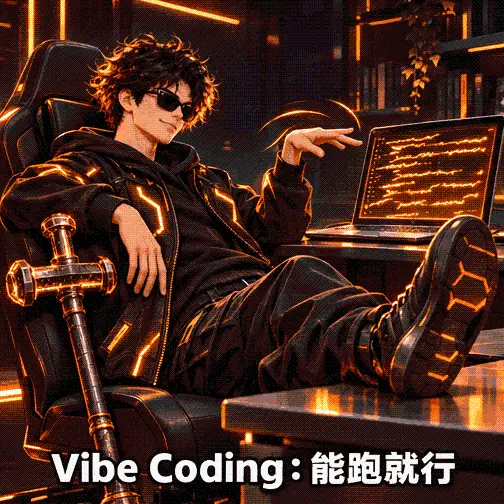
Another IP, Super Pony Jia, made an entrance with serious sci-fi protagonist vibes.
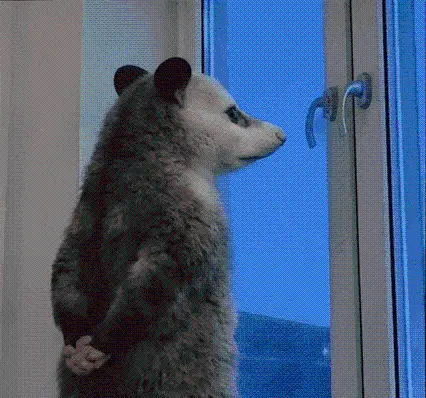
We then had ChatGPT whip up the viral "opossum with hands behind its back" meme.
Two little paws clasped behind, gazing quietly out the window—that melancholy vibe was nailed perfectly.
The big blue chubby fish also came to life under ChatGPT's pen, chowing down while waving at programmers.
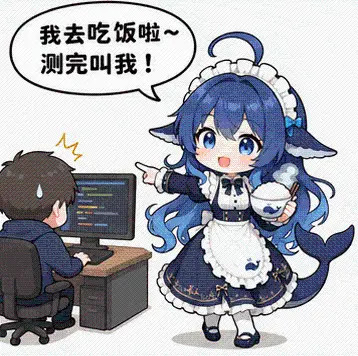
Sticking with the chubby fish's core persona, we had ChatGPT generate a transition from "deep in thought" one second to "another few bowls please" the next.
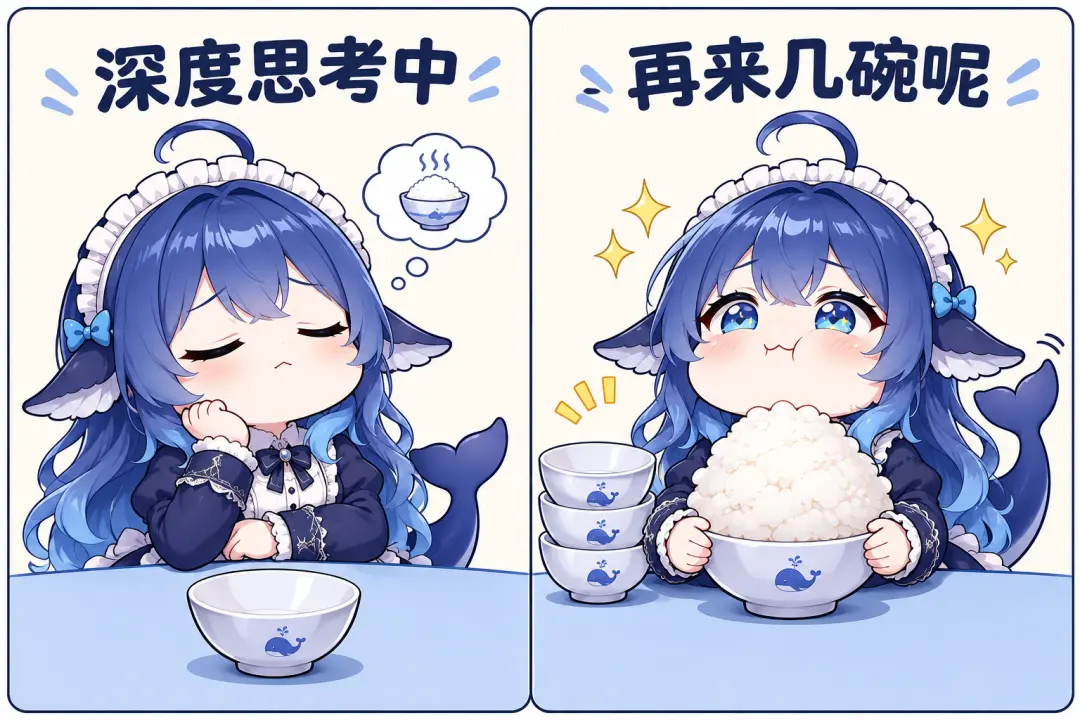
Next, we had it turn that into a GIF, seamlessly stringing together a whole set of micro-expressions and small gestures—grabbing the bowl, blinking, and wagging its tail.
Classic scenes from Stephen Chow movies, Empresses in the Palace, and more—all fair game.
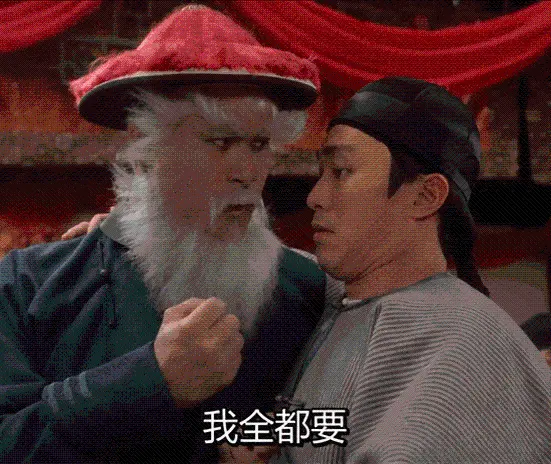
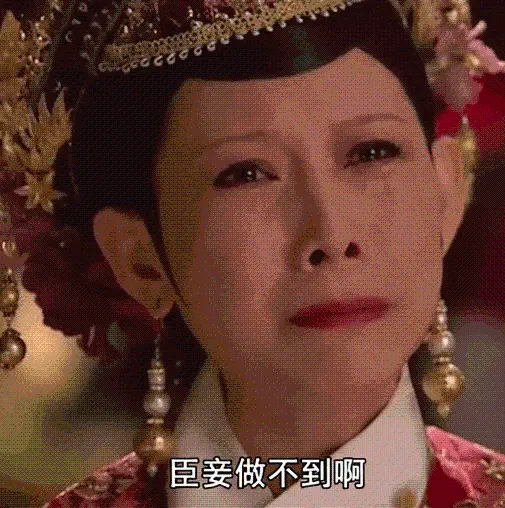
As soon as the new feature dropped, X users jumped right in.
Tibo already got the reset button.
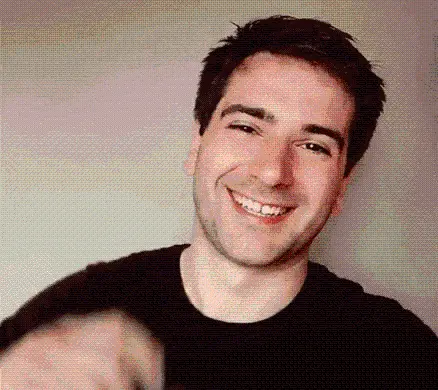
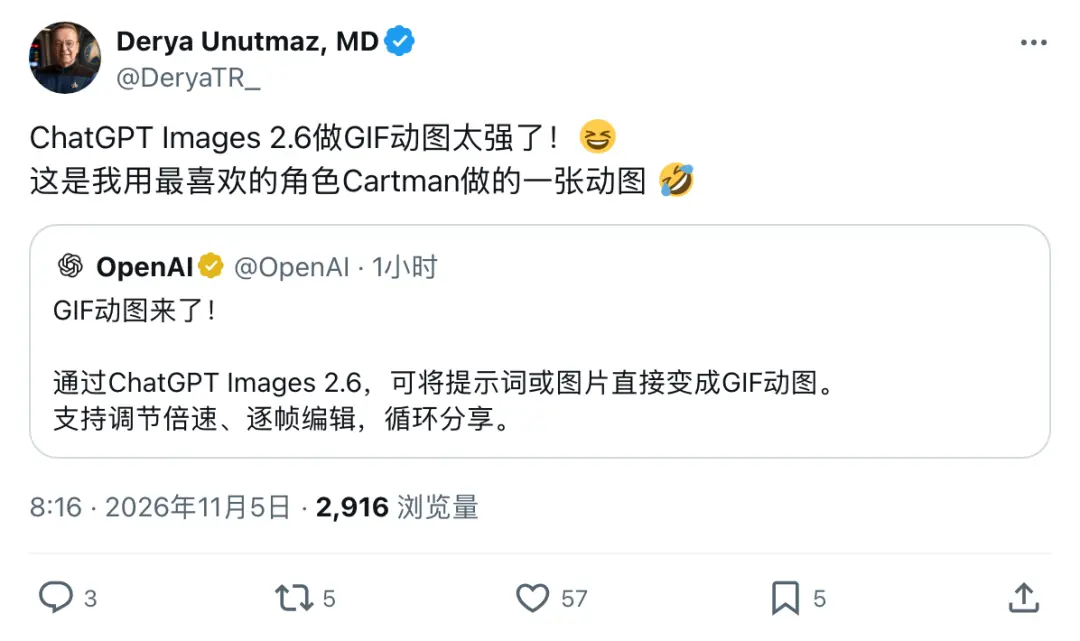
Jackson Laboratory professor Derya Unutmaz casually generated a GIF of South Park's classic character Cartman throwing his head back and slapping his knee in laughter—the character's expression was remarkably faithful.

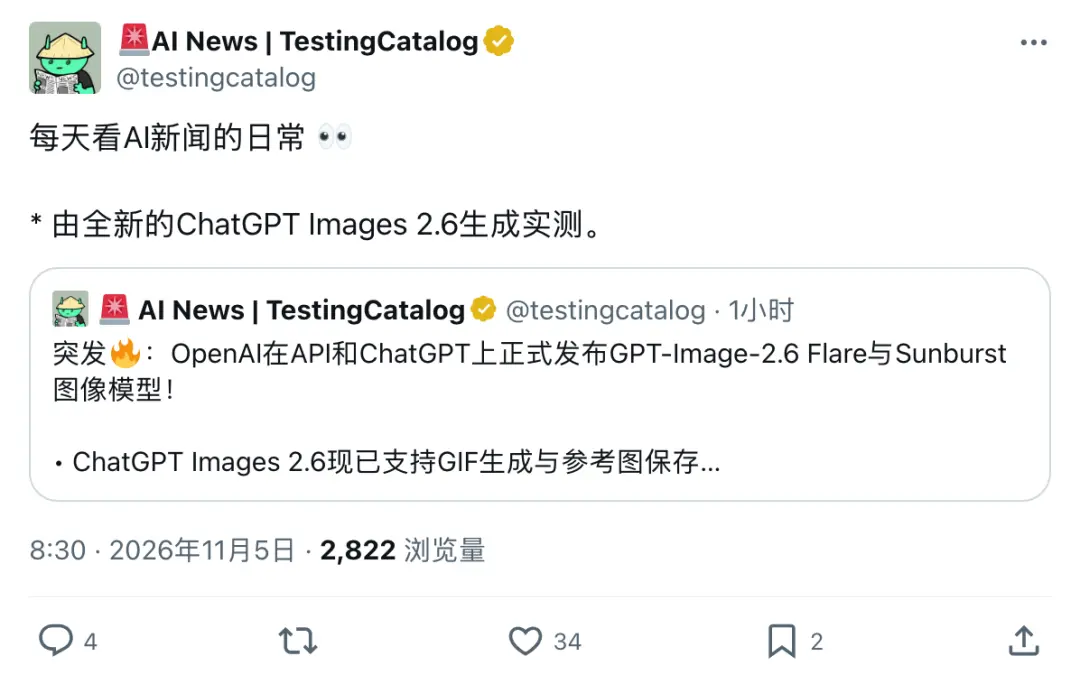
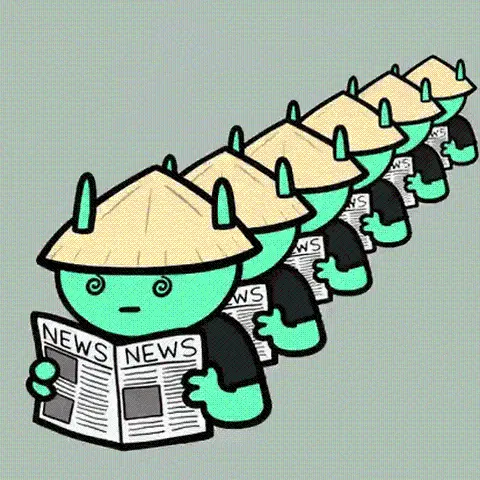
Tech blogger TestingCatalog went even further, creating an infinitely looping GIF of a row of little figures in conical hats reading newspapers with "Daily AI News"—absolutely hypnotic.
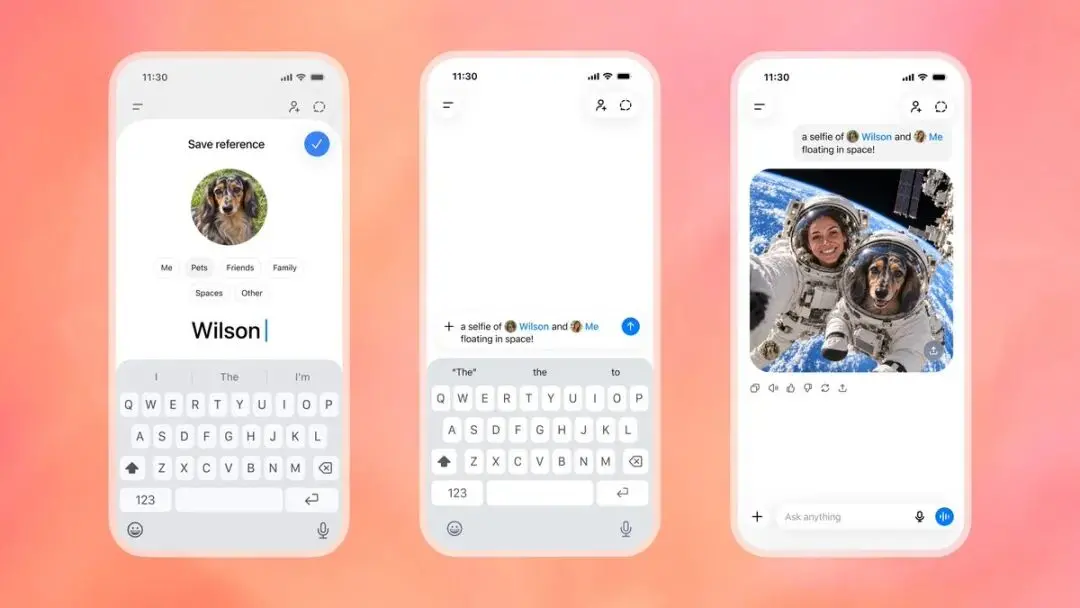
Beyond GIFs, the highly requested "save reference image" feature is here too.
Save a photo of yourself, family, friends, or pets once, and no matter which new chat window you open, just @ mention it to pull it up anytime—convenient and fun.
4.84-Second Generation, 50% Faster
Needless to say, the front-end experience is so smooth thanks to the two new models simultaneously landing on the API—
GPT-Image-2.6 Flare
GPT-Image-2.6 Sunburst
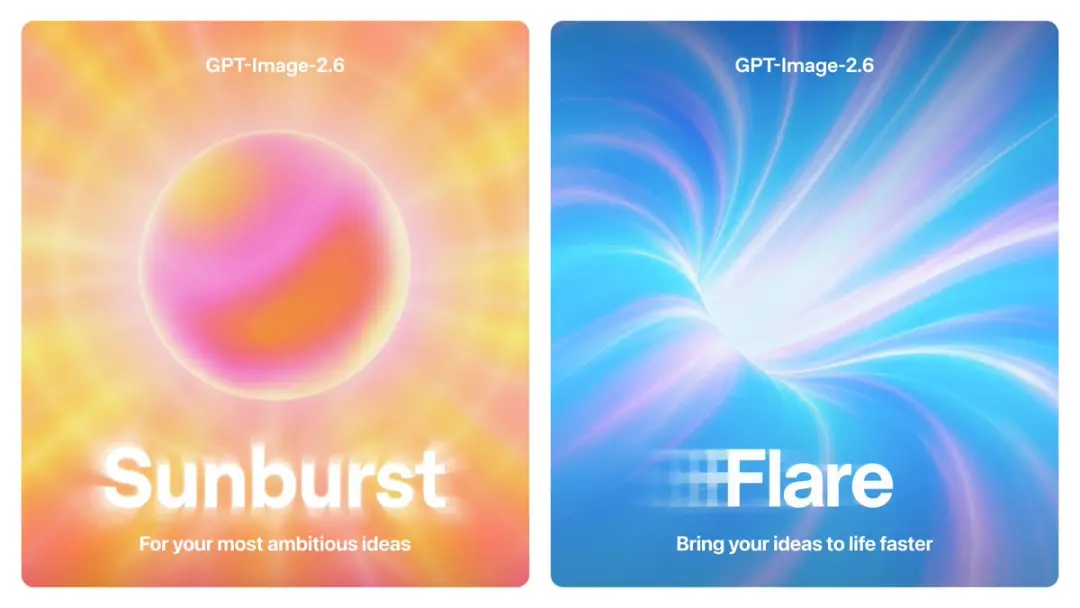
OpenAI also flexed its muscles: users worldwide generate over 4 billion images per week across ChatGPT, Codex, and the API—more than 500 million per day.
At such massive scale, version 2.6 boosts overall image generation speed by another 50%.
Flare is purpose-built for lightning-fast generation and layout design, delivering results in under 6 seconds at the lowest quality tier.
Rendering the same luxury travel ad poster, the previous-gen 2.5 Flare took 7.08 seconds, while 2.6 Flare completed it in just 4.84 seconds—a 46% speed improvement.
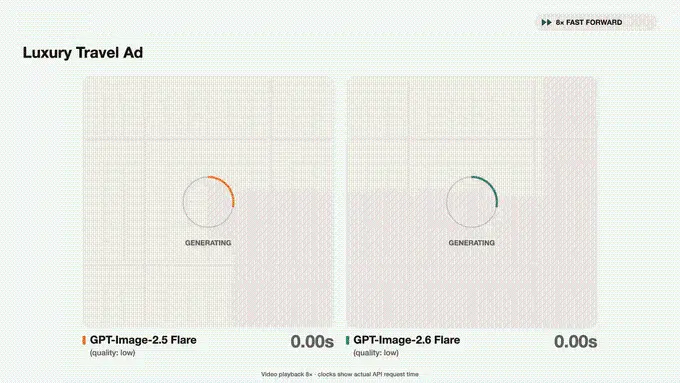
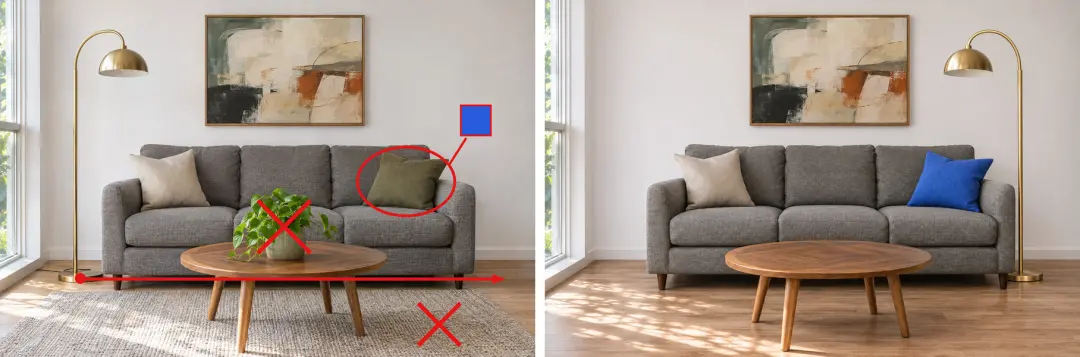
Image editing interaction also gets a major upgrade with red-line doodle support.
Circle something, draw an X, drag an arrow—Image-2.6 understands precisely and automatically erases the marks after generation.
The living room renovation image below makes it clear at a glance. The final result on the right nails it in one step, even down to the natural light transitions as sunlight falls across the wooden floor.
The other flagship model, Sunburst, focuses on high detail and consistency across multi-turn editing.
In a three-step sequential editing test with a red-haired female knight, the final image maintains consistent facial features, expressions, and sword-holding pose throughout.

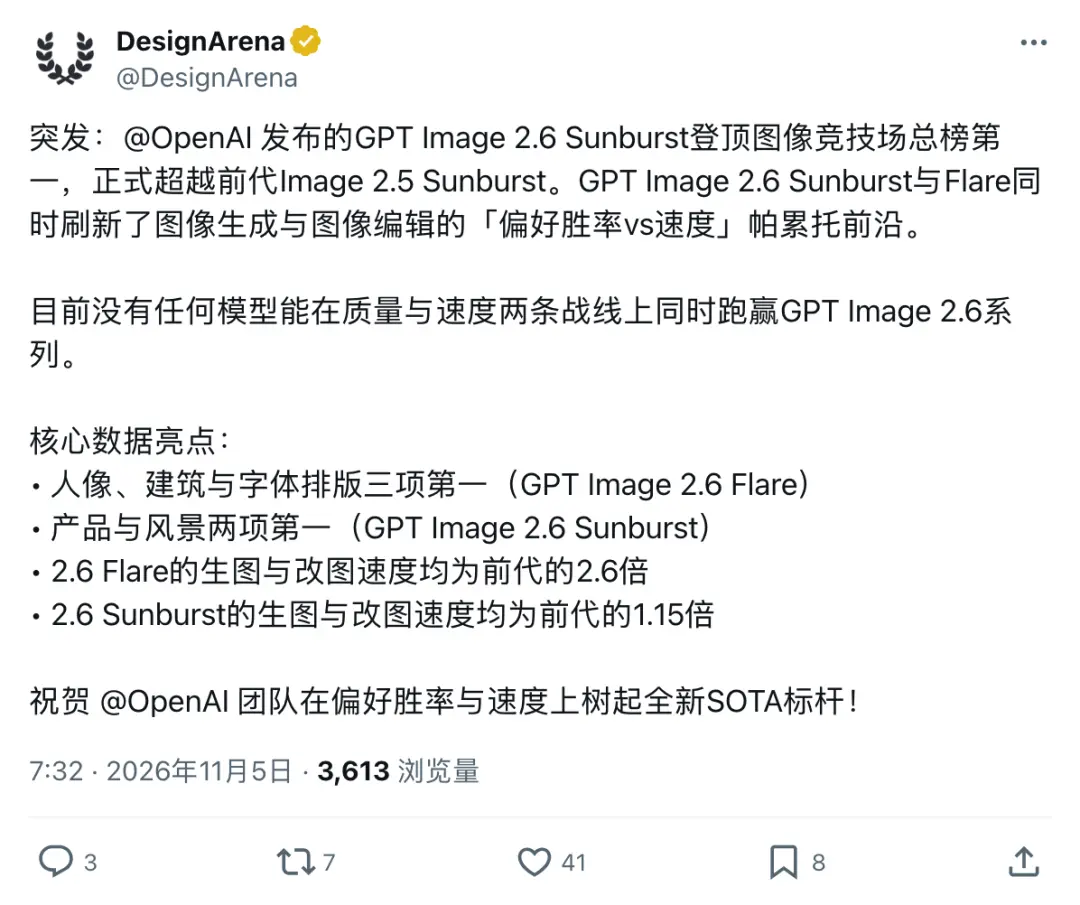
Notably, both new models debuted by taking multiple firsts on the third-party blind-test leaderboard DesignArena.
Sunburst claimed the top spot overall in the image arena and won individual championships in product and landscape categories; Flare took first place in portrait, architecture, and typography—both setting new SOTA in quality and speed.
Nine-Grid GIF Output, Native SVG Vector Export—More Features, Same Price
This time, OpenAI has baked GIF animation, SVG vector graphics, and composition complexity control right into the native API.
For developers, it's incredibly simple to use.
Just set the output format to GIF in the API, and you can freely specify between 2 and 64 frames with per-frame duration in milliseconds.
The model first generates a "nine-grid" sequence sprite sheet of连贯 motion frames at the底层, then automatically slices, aligns, and composites them into seamlessly looping GIFs—like koi swimming or someone carrying a lantern on a snowy night.
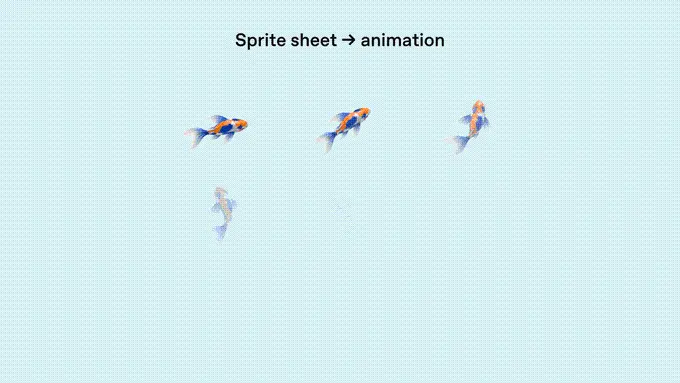
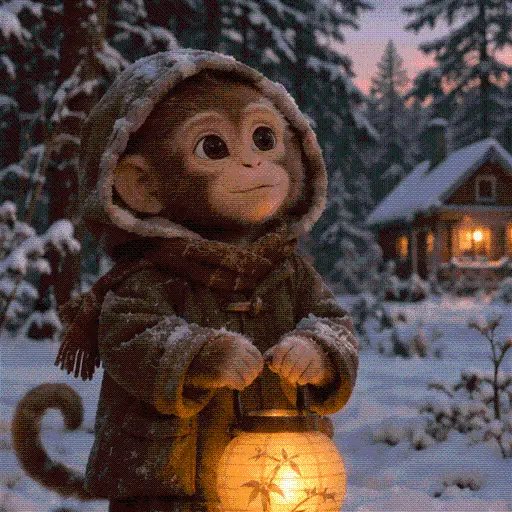
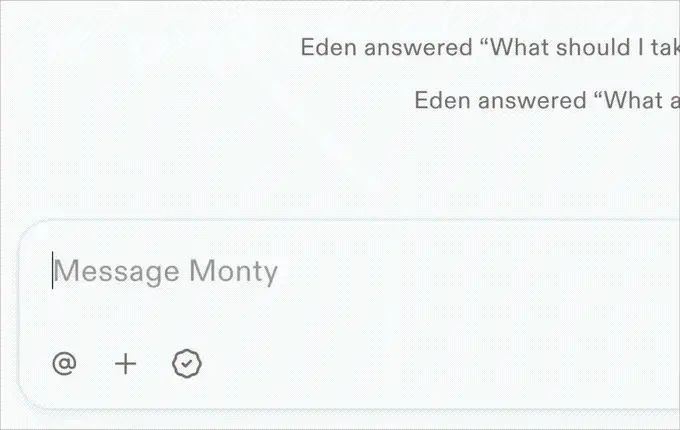
Early testing team Town has already used this capability to give their AI office assistant Monty a lively typing-wait animation.
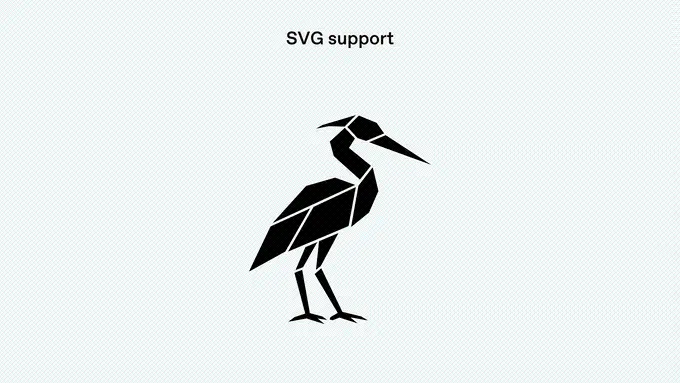
Addressing pain points for front-end engineers and UI designers, the new models also support native SVG vector export for the first time.
Generated geometric animal icons and interface buttons come with complete XML vector paths—drop them into design software and scale infinitely without blurring, or easily disassemble and recolor.
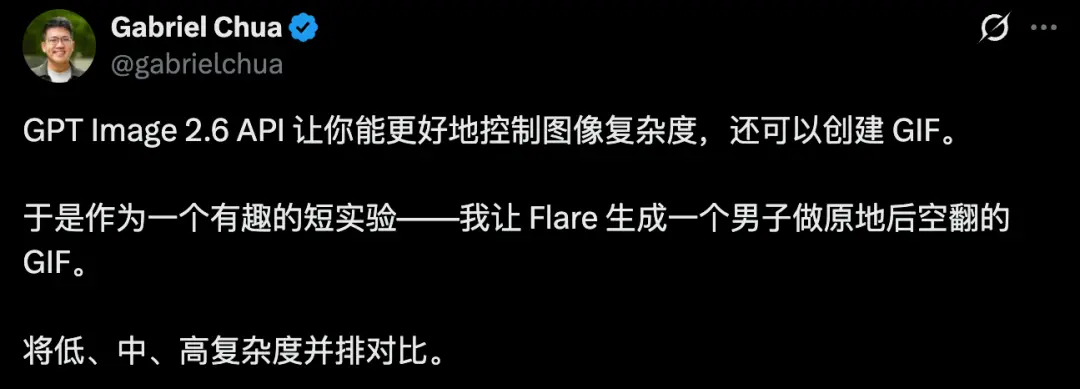
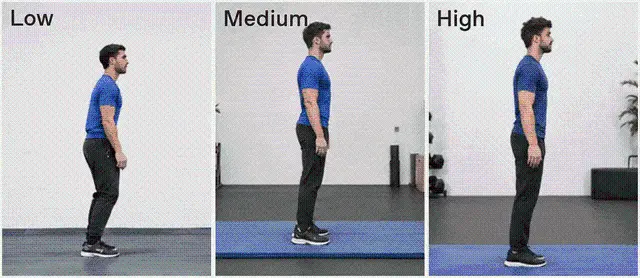
OpenAI researcher Gabriel Chua says Images 2.6 also offers better control over image complexity.
What's even better: this major version upgrade is truly "more features, same price."
Flare and Sunburst API pricing is identical to the previous 2.5 generation—$5 per million tokens for text input, $8 for image input, $30 for image output. Doodle annotations and complexity control incur no additional charges.
ChatGPT Images 2.6 is now fully rolled out to all ChatGPT and Codex web, desktop, and mobile users across all subscription tiers worldwide.
What are you waiting for? A wave of GIFs is already on its way.