





Original | Odaily Planet Daily (@OdailyChina)
Author | Asher (@Asher_0210)
Key Takeaways: Democrats swept both chambers in the U.S. midterm elections, constraining Trump's policy agenda. After the "bad news priced in," the crypto market staged a strong rally, with BTC breaking through $81,000. This article examines four altcoins that have sustained profitability and feature buyback-and-burn mechanisms, viewed through the lens of protocol revenue.
Key Points:
a. Hyperliquid generated $66.87 million in revenue over the past 30 days and approximately $557 million year-to-date. 99% of fees flow into the Assistance Fund to buy back and permanently burn HYPE, while the platform also advances its U.S. market expansion.
b. Pump.fun generated approximately $56.97 million in revenue over the past 30 days and about $414 million year-to-date, with October hitting a year-high of $62.43 million. Buyback spending over the past 30 days reached roughly $26.16 million, though the buyback ratio has been reduced from 100% to 50%.
c. Uniswap generated $8.04 million in revenue over the past 30 days, making it the most profitable DEX. Following the passage of the UNIfication proposal, Protocol Fees were activated, with revenue flowing into the TokenJar for UNI burns—transforming UNI from a pure governance asset into one tied to protocol fees.
d. Chainlink generated $4.28 million in revenue over the past 30 days and approximately $49.7 million year-to-date. Revenue comes from infrastructure services including Data Feeds and CCIP, with monthly revenue stable in the $4.4M–$5.8M range.
e. Through Payment Abstraction and the Chainlink Reserve mechanism, Chainlink automatically converts business revenue into LINK for continuous accumulation. Cumulative Transaction Value Enabled has reached $36.42 trillion.
Yesterday, the U.S. midterm election results were finalized: Democrats won both the Senate and the House, leaving Trump without majority support in Congress and significantly limiting his room to push legislation and implement policy over the next two years.
With the election results settled, the crypto market staged a long-awaited strong rally last night after a brief dip, with BTC briefly breaking through $81,000 and ETH approaching $2,450. The market appears to be anticipating that as Trump's agenda faces more checks, the shocks from policy whipsawing may diminish, finally giving capital markets room to breathe. Prior fears about Republicans losing both chambers have gradually dissipated, and buyers are returning now that the "bad news is priced in."
With the long-dormant crypto market bouncing back and BTC and ETH leading the charge, which altcoins should investors position for next? Protocols that have continued to print money this year may be worth a closer look. Below, Odaily Planet Daily examines four altcoins worth watching, starting from protocol revenue and factoring in token buyback and burn mechanisms.
Hyperliquid: Tens of Millions in Monthly Revenue, Plus U.S. Market Upside on Top of Buybacks
Apart from the two stablecoin issuers Tether and Circle, Hyperliquid is the most profitable crypto-native project over the past 30 days, with revenue reaching $66.87 million.
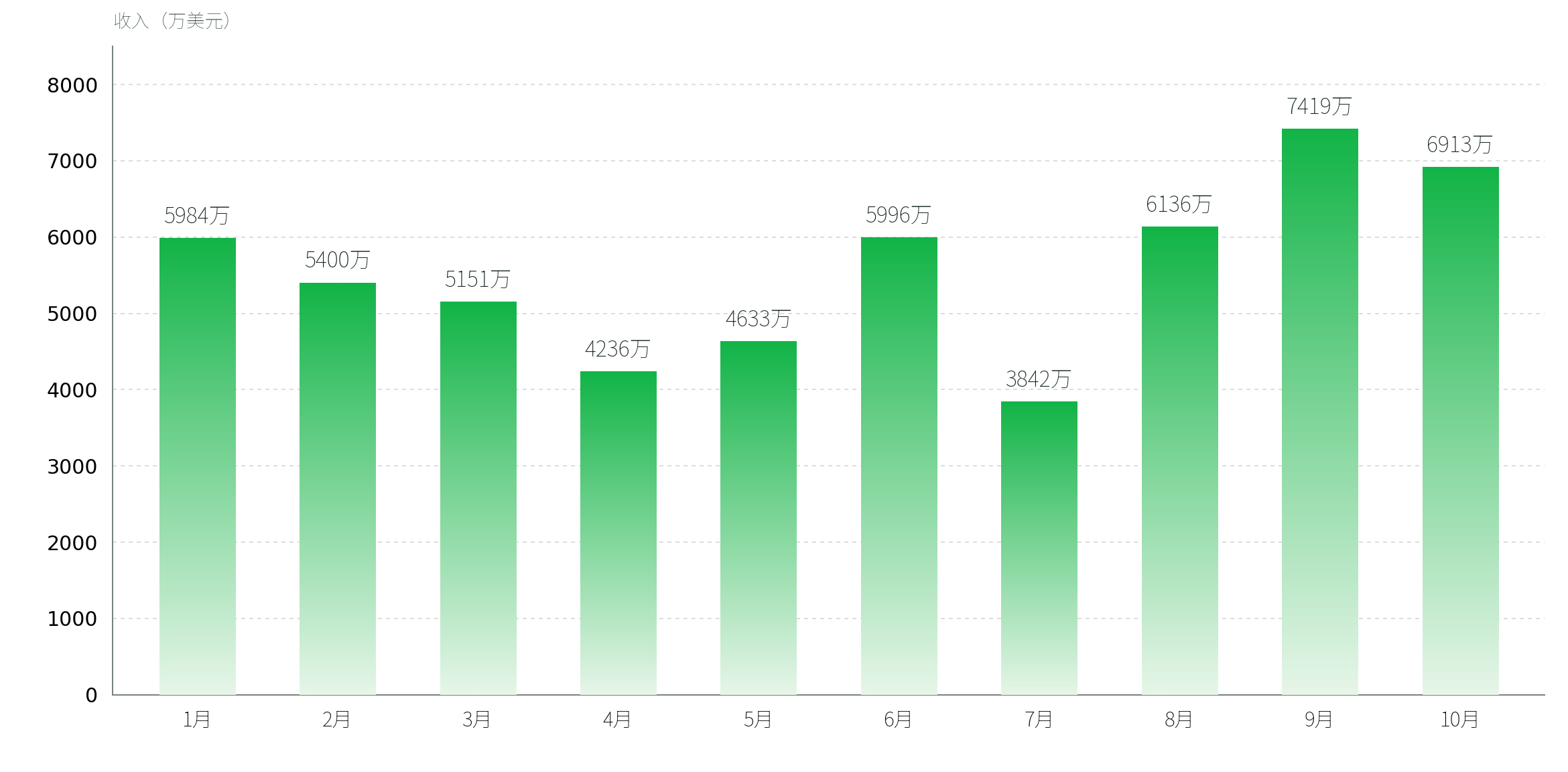
Looking at monthly data, Hyperliquid's protocol revenue from January to October this year was approximately $59.84M, $54.00M, $51.51M, $42.36M, $46.33M, $59.96M, $38.42M, $61.36M, $74.19M, and $69.13M, totaling about $557 million. After revenue fell to a year-low in July, it climbed back above $60 million in August, hit a year-high of $74.19 million in September, and though it pulled back in October, it remained above all first-half monthly levels.
Hyperliquid's revenue primarily comes from perpetual futures and spot trading fees. The platform currently uses a tiered fee schedule: for regular users, perpetual futures base Taker/Maker rates are 0.045% and 0.015% respectively, while spot rates are 0.07% and 0.04%. Higher trading volume and HYPE staking amounts result in lower fees. Funding rates are paid directly between longs and shorts and do not constitute Hyperliquid's protocol revenue.
Nearly all the money Hyperliquid earns goes toward buying back and burning HYPE. Currently, about 99% of protocol-generated fees flow into the Assistance Fund (per SEC filings, Hyperliquid raised the proportion of protocol fees flowing into the Assistance Fund from 97% to 99% in August 2025), which is used to continuously buy HYPE from the secondary market and permanently burn the purchased tokens.
Beyond existing revenue, Hyperliquid is also advancing its U.S. market expansion. In September, Kraken parent company Payward announced plans to offer on-chain perpetual contract trading to U.S. customers through its licensed entities, built on Hyperliquid. In October, Hyperliquid further opened HIP-3* testnet functionality, enabling deployers to manage trading access through on-chain whitelists. The related business still requires regulatory approval before going live.
"Earns well, keeps buying back, and now has U.S. market upside"—that may be the most compelling investment thesis for HYPE right now.
Pump.fun: The "Shovel Seller" of the Meme Trade, Profiting from Wave After Wave of Token Launches
Another project with revenue close to Hyperliquid's—and one that briefly surpassed it—is meme launchpad leader Pump.fun, with approximately $56.97 million in protocol revenue over the past 30 days.
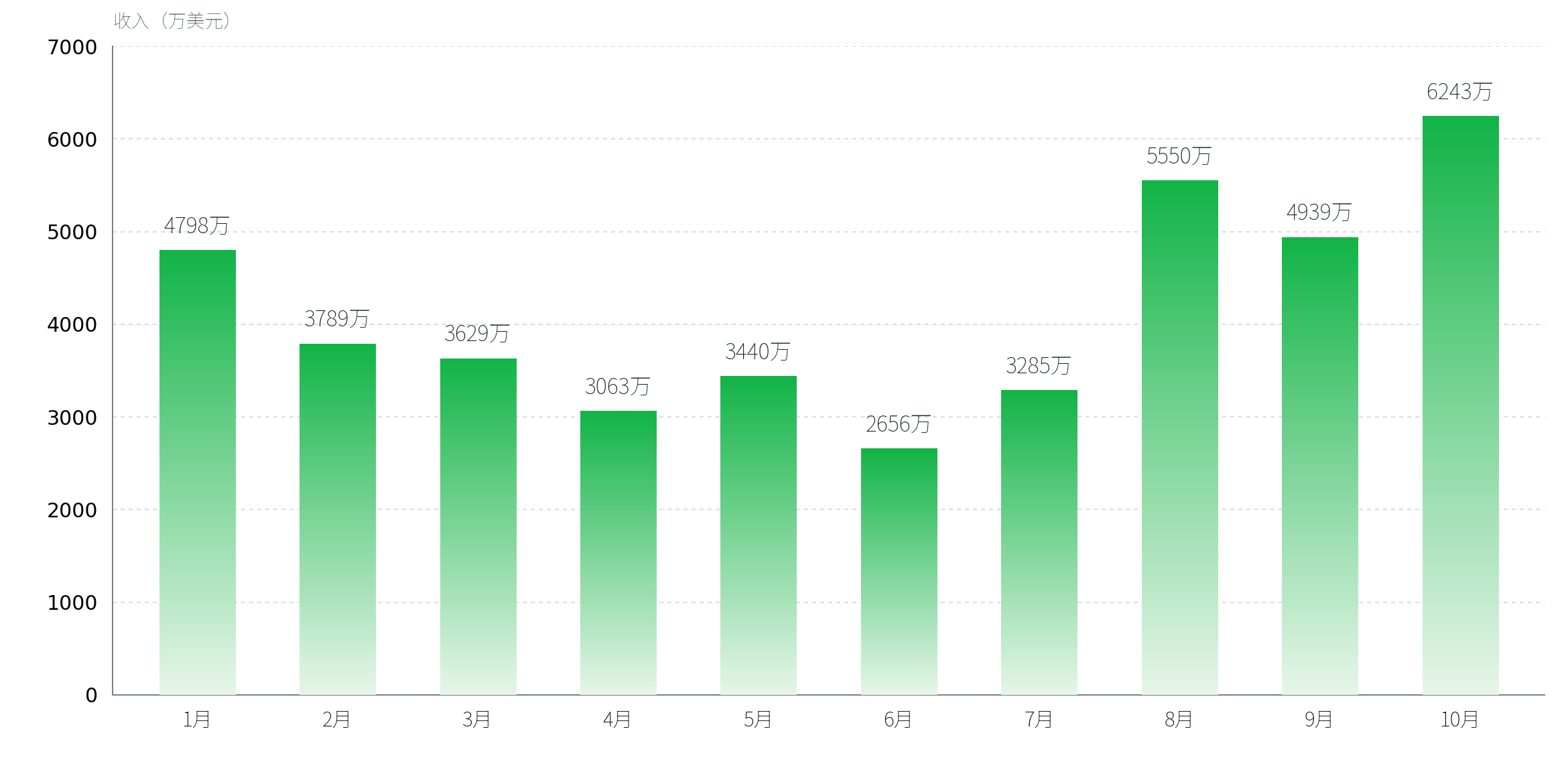
Looking at monthly data, Pump.fun's revenue from January to October this year was $47.98M, $37.89M, $36.29M, $30.63M, $34.40M, $26.56M, $32.85M, $55.50M, $49.39M, and $62.43M, totaling about $414 million. After hitting a year-low in June, revenue gradually recovered, surpassed $50 million in August, and reached a year-high of $62.43 million in October—up about 26% from September.
Pump.fun's revenue comes primarily from continuous trading of new tokens on the platform. Creating a token is currently free, but buying and selling during the Bonding Curve phase incurs trading fees. Under Pump.fun's latest fee schedule, the total fee per Bonding Curve transaction is 1.25%, of which 0.95% goes to the protocol and 0.30% is allocated to the token creator. Additionally, a 0.015 SOL graduation fee is charged when a token graduates from Pump.fun to PumpSwap.
Pump.fun's earnings also continuously convert into PUMP buy pressure. In April this year, Pump.fun reduced its buyback ratio from 100% to 50%, but as platform revenue recovered, buyback spending over the past 30 days still reached approximately $26.16 million—averaging about $870,000 per day. Though the buyback ratio was halved, the platform is still putting real money into buying PUMP and permanently burning the repurchased tokens.
In September, Pump.fun launched Custom Pairs and Holder Rewards, enabling new tokens to be paired with assets like PUMP and tokenized stocks, and allowing creators to distribute fees to token holders—expanding token launch and trading functionality.
If you believe the meme sector is here to stay, PUMP may be more worth watching than betting on the next meme coin.
Uniswap: DEX Leader Flips the Fee Switch, UNI Finally Starts "Capturing" Protocol Revenue
Over the past 30 days, Uniswap generated $8.04 million in revenue, making it the most profitable DEX. While it still trails platforms like Pump.fun and Hyperliquid that earn tens of millions monthly, within the DEX sector, Uniswap's earning power has returned to the top tier.
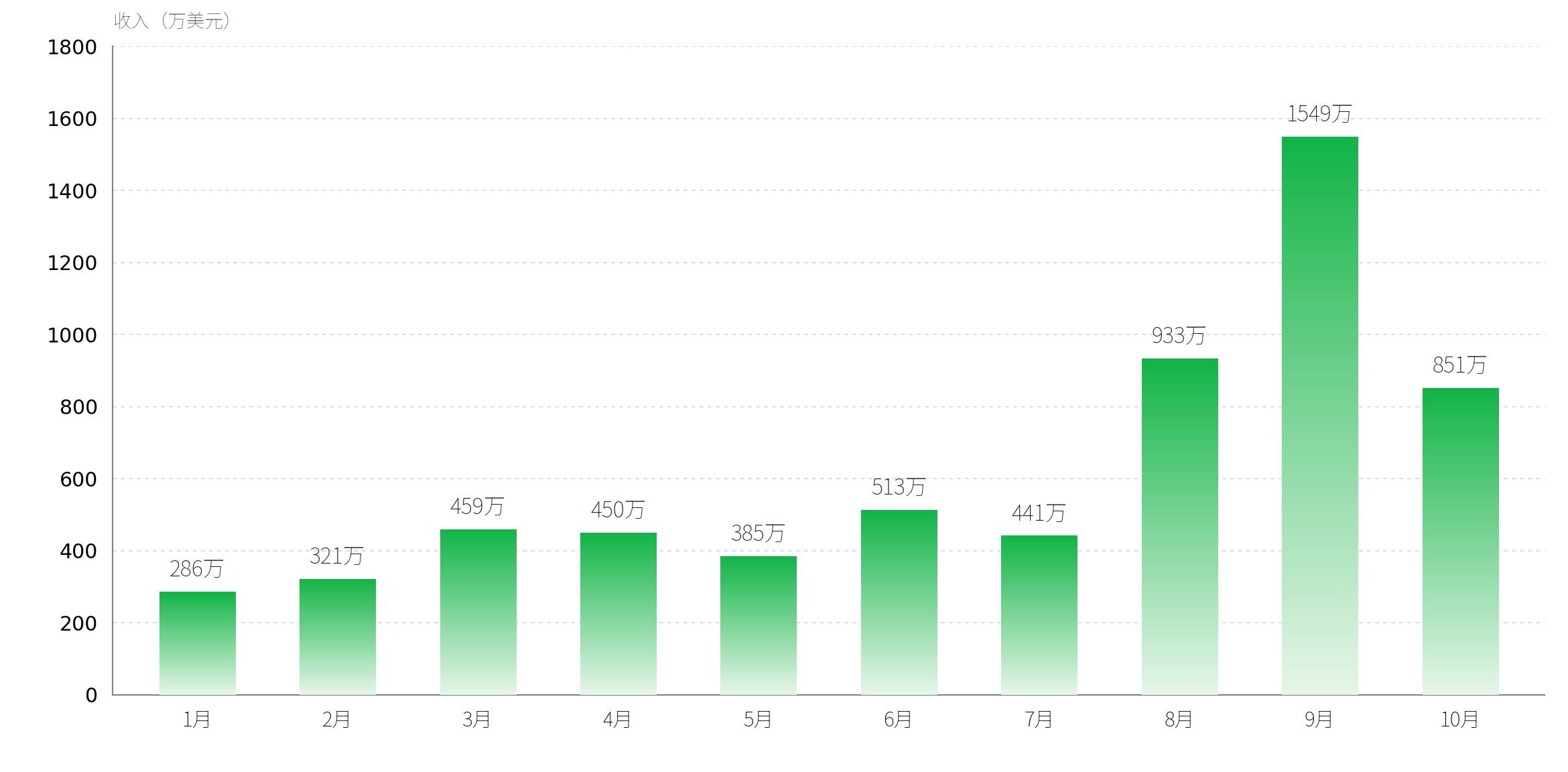
Looking at monthly data, Uniswap's protocol revenue from January to October this year was approximately $2.86M, $3.21M, $4.59M, $4.50M, $3.85M, $5.13M, $4.41M, $9.33M, $15.49M, and $8.51M, totaling about $61.88 million. Revenue held steady at roughly $3M–$5M per month for the first seven months, rose noticeably in August, hit a year-high of $15.49 million in September, and though it pulled back to $8.51 million in October, it remained above all first-half monthly levels.
Uniswap's revenue comes from Protocol Fees collected during transactions. Protocol fees are now active on all Uniswap v2 pools and select v3 pools, gradually expanding from Ethereum to Arbitrum, Base, OP Mainnet, BNB Chain, Polygon, and other chains. Taking v2 as an example, users still pay a 0.30% fee per transaction, of which 0.25% goes to LPs and 0.05% to the protocol; v3 charges protocol fees at corresponding rates depending on the fee tier of each pool.
Since the UNIfication proposal passed in late 2025, Uniswap has officially activated Protocol Fees and directs the revenue toward UNI burns (for more, see: After Uniswap's Fee Switch: Is This DeFi Revolution's "Report Card" Good Enough?). Protocol fees flow into the TokenJar, and external participants seeking to withdraw the accumulated assets must burn a corresponding amount of UNI.
The UNI token has transformed from a "pure governance asset" into one explicitly tied to protocol fees and usage. If DEXs remain the most fundamental gateway for on-chain trading, dollar-cost averaging into UNI is now at least no longer just a bet on Uniswap's brand and position.
Chainlink: Not Chasing Hype, Running the "Toll Booth" of On-Chain Finance
Without relying on meme hype or contract trading volume, Chainlink still generated $4.28 million in revenue over the past 30 days. Compared to platforms like Pump.fun and Hyperliquid whose revenue fluctuates with market trading activity, Chainlink runs a more infrastructure-oriented business—as long as on-chain applications like DeFi, stablecoins, and RWA continue to operate, demand for oracles, cross-chain communication, and data services will not disappear.
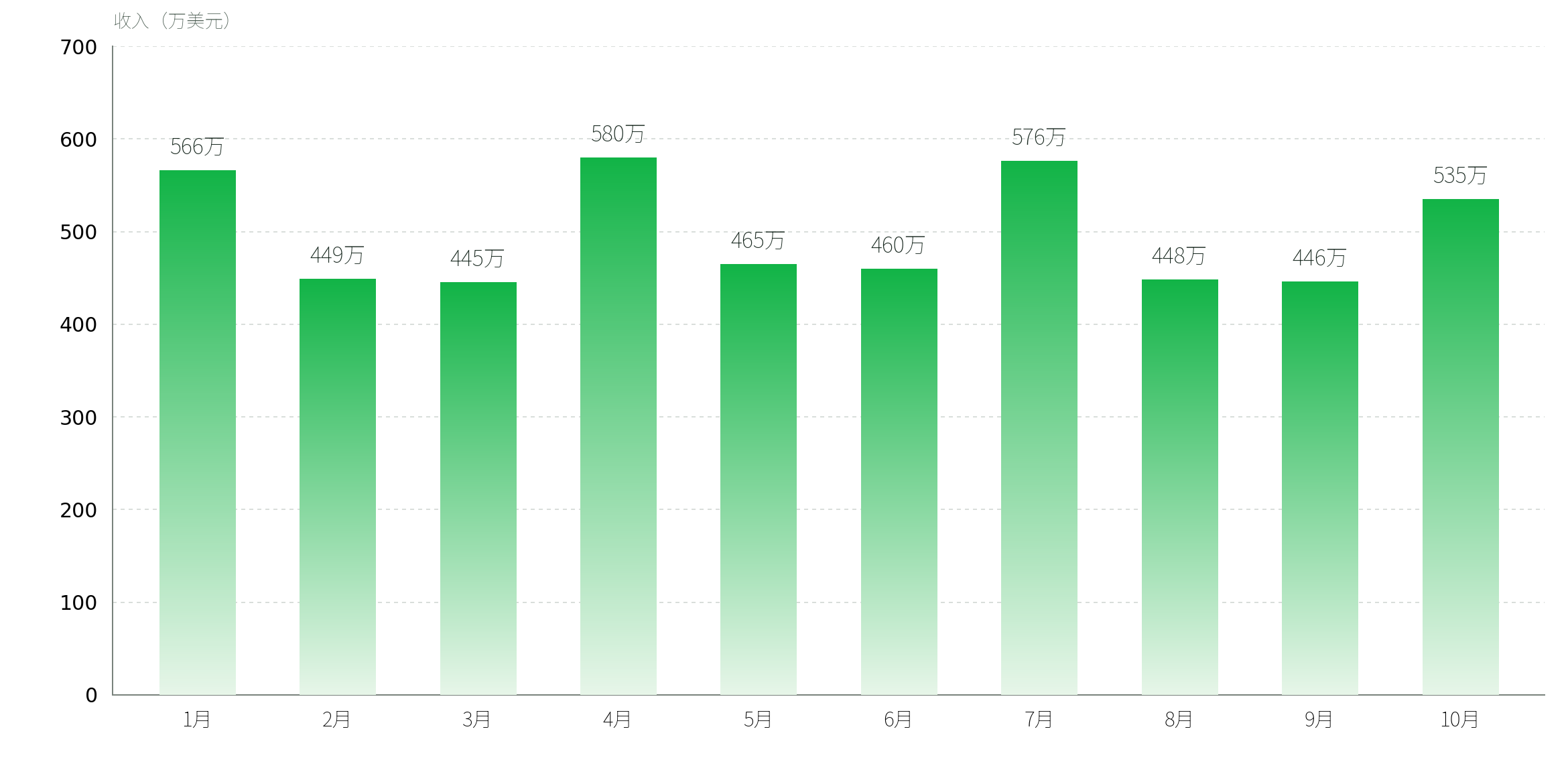
Looking at monthly data, Chainlink's revenue from January to October this year was approximately $5.66M, $4.49M, $4.45M, $5.80M, $4.65M, $4.60M, $5.76M, $4.48M, $4.46M, and $5.35M, totaling about $49.7 million. Monthly revenue has remained broadly in the $4.4M–$5.8M range, with slight declines in August and September before recovering to $5.35 million in October.
Chainlink's revenue comes from fees paid by developers, protocols, and institutions for using Chainlink services such as Data Feeds, CCIP, Automation, and VRF, covering on-chain fundamentals like price data, cross-chain communication, and automated execution. Chainlink's services now extend beyond DeFi and increasingly into stablecoins, RWA, and institutional asset tokenization. Official data shows that as of July 2026, cumulative Transaction Value Enabled (transaction value facilitated by Chainlink) reached $36.42 trillion.
Chainlink has introduced Payment Abstraction and the Chainlink Reserve to gradually convert its business growth into sustained demand for LINK. On-chain and off-chain service revenue paid by users and enterprises can be automatically converted into LINK through Payment Abstraction and flow into the Chainlink Reserve for continuous accumulation.
If more financial assets do migrate on-chain in the future, Chainlink doesn't necessarily need to pick which blockchain or which DeFi project ultimately wins—as long as on-chain finance continues to expand, this "toll booth" will keep collecting more revenue.