






Author: Bu Shuqing, Wall Street Journal
As Democrats scored a sweeping victory in the U.S. midterm elections and Republicans suffered a major setback, the Trump administration's military posture toward Iran has shown signs of easing.
According to Xinhua News Agency on Wednesday, Trump acknowledged in a phone interview with The Wall Street Journal that the Iran conflict did affect Republican performance in the midterm elections to some extent and also dragged down his approval ratings, but he expressed no regrets, saying, "(If I had to do it again) I would do the same."
Earlier, Trump said in a media interview regarding the U.S.-Iran war situation: "We seem to be getting everything we want." He then added: "I'm ready, we're ready. If necessary, we can act at any time, but it may not be necessary."
Trump's remarks do not mean the United States has abandoned the military option. He still stated that the U.S. is prepared for escalation, but there may currently be no reason for further military action.
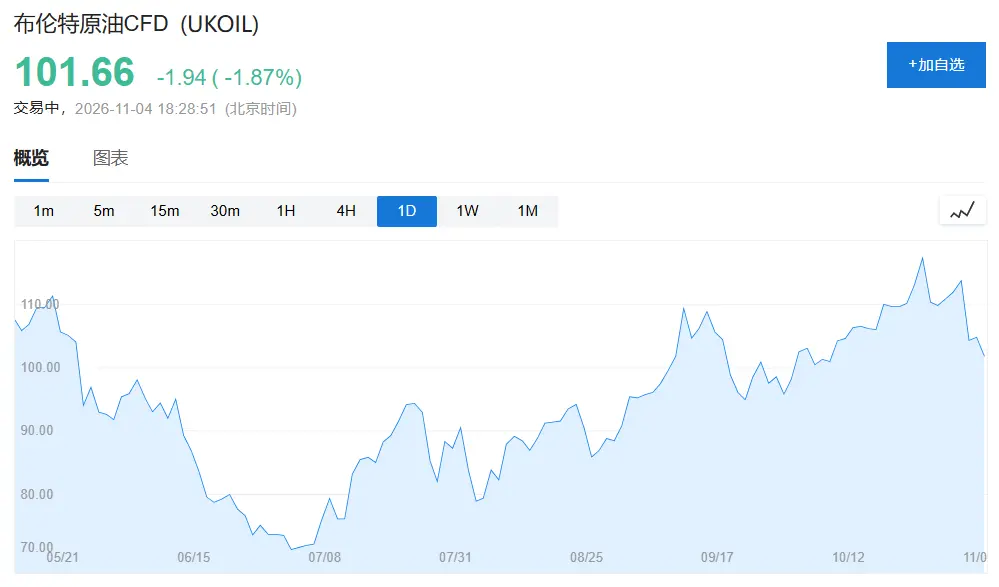
As Trump and his administration officials have recently adopted a somewhat softer tone on the Iran issue, international oil prices have also dropped significantly from last week's highs.
Iran Warns U.S.: Resuming Large-Scale Strikes Would Bring a "Nightmare"
As for the U.S. midterm election results, Iran interpreted them as a signal that American voters oppose the war.
Mohammad Bagher Ghalibaf, Speaker of Iran's Parliament and senior representative for negotiations with the U.S., said the U.S. midterm elections showed that the American people have cast a vote "against war." He also warned that if the United States chooses to launch large-scale attacks on Iran again, it will face a "nightmare."
Although the U.S. has recently sent some signals of de-escalation, tensions between the U.S. and Iran remain fundamentally unchanged. Tehran stated that Iran is ready at all times to respond to new military strikes and will counter forcefully.
Gulf Arab states are also staying vigilant and urging Trump to give diplomatic negotiations more time. The UAE, Qatar, and Saudi Arabia are all regional allies of the United States, and during the most intense phase of the war, these countries were hit by thousands of Iranian drone and missile attacks.
U.S.-Iran Talks Still Face Disagreements; Strait of Hormuz Situation Weighs on Oil Market
On the diplomatic front, U.S.-Iran negotiations have made limited progress recently. Qatar and Pakistan have been mediating, but the two sides still disagree on several key issues.
Among them, Iran wants the United States to lift its naval blockade on Iranian ports, while Washington demands that Tehran make concessions on its nuclear activities.
As previously mentioned in Wall Street Journal articles, Qatari mediation is still ongoing, but the differences between the U.S. and Iran have not yet been bridged. Qatari mediators are expected to receive feedback from both the U.S. and Iran on a new proposal within the next 36 hours.
This means that although negotiations have not achieved substantive breakthroughs, diplomatic channels are still functioning.
Iranian President Pezeshkian said this week that Supreme Leader Mojtaba Khamenei has granted the government greater authority to push for peace negotiations. This may involve some issues previously regarded by Tehran as "non-negotiable," leaving some room for a diplomatic solution.
Nine-Month War Is Becoming Political and Economic Pressure for Trump
The U.S.-Iran war began in late February this year, when the United States and Israel launched strikes on Iranian targets and killed several senior officials, including former Supreme Leader Ali Khamenei.
In the early days of the war, U.S. officials had expected the conflict to last four to six weeks at most, but Iran's sustained retaliatory capability exceeded expectations. Tehran's counterattacks not only disrupted the Persian Gulf region but also shook the entire Middle East situation.
Meanwhile, rising energy costs brought by the war are backfiring on the U.S. domestic economy. U.S. diesel prices have hit record highs, and average gasoline prices have also exceeded $4 per gallon. Soaring fuel costs have intensified Americans' dissatisfaction with the war.
This also constitutes the real dilemma Trump currently faces: on the one hand, he still insists that Iran must not be allowed to possess nuclear weapons and retains the possibility of military escalation; on the other hand, the ongoing war and elevated energy prices are increasing domestic political pressure.
After Democrats swept Congress in the midterm elections, Trump signaled a pause in military action against Iran, and U.S.-Iran diplomatic negotiations have once again drawn attention. However, given the two sides' disagreements over the naval blockade and nuclear issues, as well as Iran's continued military vigilance, the situation is still far from genuine de-escalation.