






By: Rathin Shah
Translated & Compiled by: TechFlow
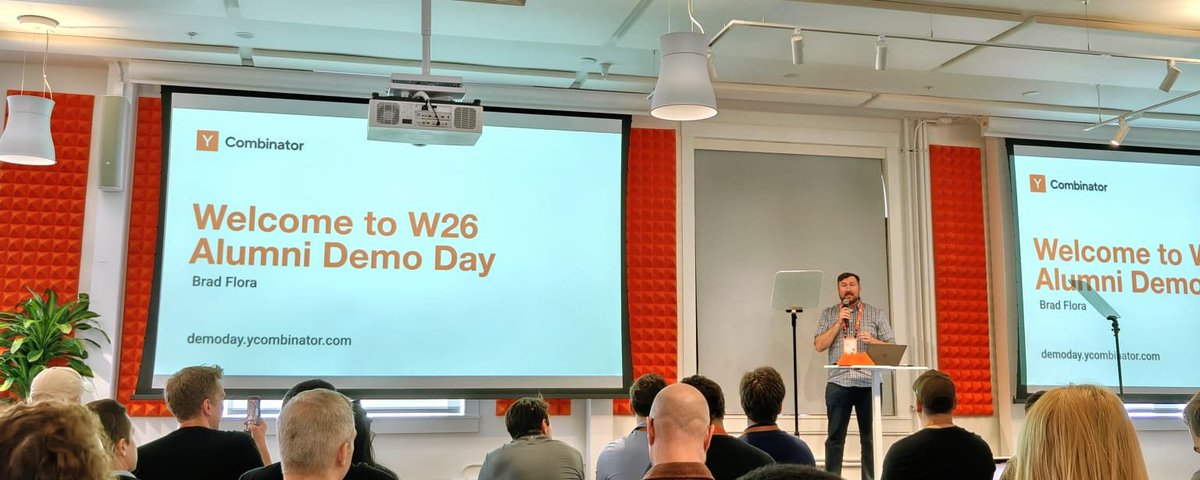
This is not just another Demo Day recap. After sitting through 199 pitches in person, the author uses data and real-world examples to uncover the underlying logic of today's AI startup landscape: why 60% of companies are going all-in on AI, why the "copilot" concept has all but disappeared, and why founders selling back to their former employers are generating revenue the fastest. More importantly, it highlights the fatal risks lurking behind seemingly hot trends and the overlooked white spaces where the next legendary companies could be born.
I attended YC's 2026 Winter Demo Day. 199 companies. Here's everything I observed: the data, the patterns, and everything you need to know if you're a future founder.
Core Lessons for Founders
On Market / Problem Statement
1. AI is not a category; it's infrastructure. 60% of the batch is AI-native. Another 26% is AI-enabled. Only 14% has no AI at all. The question isn't "Are you using AI?" It's "What does your AI do that an off-the-shelf foundation model can't?"
2. Replace, don't assist. The core theme is "AI employees," not copilots or assistants. Every pitch says "We replace [expensive human role] end-to-end," and pricing is a fraction of that person's salary. Copilots assist. Agents act. The industry has moved on.
3. Find the "Claude Code" for your domain. Every profession has structured outputs AI can now generate: contracts, CAD files, financial models, surgery plans, spec sheets. Target professions where practitioners bill $100-$500+/hour, tools are 10-30 years old, and there's a clear validation step. Vast fields include tax planning, civil engineering, management consulting, clinical trials, patent drafting, and music production.
4. Consider the services model. About 20% of the batch are building AI-native service companies (law, recruiting, accounting, insurance), charging for outcomes but enjoying software-like margins. They show the fastest revenue growth in the batch. The playbook: start as a service → gain revenue and data → launch automation → become a platform.
5. B2B dominates. AI agents replace B2B knowledge workers. 87% are B2B. Only 14 are consumer-facing (about 7%). Current AI capabilities perfectly unlock business workflows. It's a good business, but the legendary companies from this batch will likely be the outliers: uranium exploration firms, lunar hotels, robot cowboys, parasite drug companies.
6. Build a data flywheel. Every customer interaction should make your product better. LegalOS trained on 12,000 visa applications → 100% approval rate. It improves perfectly with every hire. Without a data flywheel, you're just a wrapper.
7. Don't build a generic AI wrapper. "AI for everything" loses to "AI that replaces one specific $80,000/year job." Go deep into an unsexy industry. The best opportunities are in industries you'd never pitch at a cocktail party.
8. The absence of consumers is a signal of opportunity. Zero education companies. Zero consumer social. Zero mental health/fitness. Zero govtech. Categories with the least historical funding produce the biggest outlier returns. The founder who cracks AI-native entertainment, social, or education will own an entire category.
9. Hardware is back. 18% of the batch has a hardware component (robotics, drones, wearables, space tech). This is a significant jump from recent batches. The physical product companies built by former SpaceX/Tesla alumni are the most differentiated in the batch.
On Distribution
10. Distribution is a premise, not an afterthought. 60% of the top 15 growth companies acquired customers through their founder network or the YC network. If your first 20 customers require you to "figure out distribution," you've chosen the wrong market.
11. Your former employer is your first market. The dominant GTM move (about 35% of B2B): founders spent years in an industry, left, then sold back into their network. Their contact list is their distribution channel.
12. The PE acquisition channel is severely underrated. Ressl AI and Robby independently discovered that PE-backed acquirers desperately need profit improvement tools. One PE deal = 50-200 locations.
13. Choose a market where you already have a distribution network. Companies that struggle with GTM are almost always the ones that build first and then ask, "How do we sell this?" Winners ask, "Who do I already have access to, and what do they desperately need?"
On Teams
14. Founder-market fit is the strongest predictor of revenue velocity. Founders who have actually done the job they're now automating close deals in days. Everyone else takes months. Proximitty ($700K ARR in less than 3 weeks): CEO was a McKinsey bank risk consultant. Corvera ($33K MRR in 4 weeks): CEO ran CPG brands.
15. Your co-founder relationship is your moat. 46% of the batch is a 2-person team. The strongest teams have worked together for years: former colleagues, classmates, siblings, repeat co-founders. If you haven't shipped something with your co-founder, you haven't validated the most important part of starting a company.
16. Domain expertise beats degrees. The most compelling founders have lived the problem: a dentist building surgical AI, an aircraft maintenance supervisor building mechanical tools, a lobbyist building policy AI. "Big tech alum" is the baseline, not a differentiator.
On Pitches
17. A killer ending matters. When 199 companies pitch in one day, you need to be the one people talk about over drinks. "The first AI Oscar will be won by Martini." "You can book a moon hotel for 2032." Make your vision specific, falsifiable, and quotable.
On What to Avoid
18. Avoid undifferentiated agent infrastructure. 8-10 companies are building agent monitoring/testing/compression. Foundation model providers will build these natively. If "[existing DevOps tool] but for AI agents" describes you, you're in the danger zone.
19. Avoid AI-native services without a data moat. Fastest revenue but lowest defensibility. Core tech can be replicated in weeks. Traditional companies will adopt AI in 12-18 months. Without proprietary data or embedded distribution, the moat is thin.
20. Avoid commoditized workflow wrappers. AI does one well-defined task, while GPT-5 could natively do the same thing in 6 months.
On the Ground
199 pitches. Fresh startups fresh out of the YC oven have a unique smell. Excitement, high energy, never boring.
Some memorable moments:
A startup pitching the first hotel on the moon, with a White House invite and a $500 million letter of intent.
Robot cowboys herding cattle with autonomous drones.
An AI demo company generating its own pitch deck live during the demo.
A company, while demonstrating satellite imagery, casually zoomed in on Tehran, Iran. (The entire room went silent.)
Martini's founder closed with, "The first AI-made movie Oscar will be won by Martini!" – a line guaranteed to make investors either roll their eyes or reach for their checkbooks.
The hardware demo area was buzzing: robots, drones, microscopes with life science proteins, automotive radar. Real, physical things you could touch. This wasn't just a batch of SaaS dashboards.
After listening to 199 pitches, you stop hearing individual companies and start seeing patterns. Here's what I found.
The Big Numbers
Total Companies: 199
Business Model:
B2B: 174 (87%)
B2C: 14 (7%)
B2B2C: 11 (6%)
Product Type:
Pure Software: 163 (82%)
Hardware + Software: 24 (12%)
Pure Hardware: 12 (6%)
AI Classification:
AI-Native (AI is the product): 120 (60%)
AI-Enabled (Existing workflows + AI): 52 (26%)
Non-AI: 27 (14%)
Traction:
Estimated Median ARR: ~$50-100K
Estimated Median Growth: ~30-50% MoM
Companies with ARR > $1M: ~5%
Zero Revenue: ~50%
Major Industries: B2B Software (59%), Industrial (15%), Healthcare (10%), Fintech (8%), Consumer (4%).
Only 14 companies are consumer-facing; YC officially categorizes only 7 as "Consumer." The rest are consumer products wearing enterprise labels, categorized under B2B, Healthcare, or Fintech.
The Top 10 Themes
1. AI Agents Replace Entire Job Functions
The core theme. Not copilots, full replacement.
Beacon Health replaces prior authorization administrators.
Perfectly replaces recruiters end-to-end.
Lance replaces front desk staff at 50+ Marriott/Hilton/Hyatt hotels.
Mendral (Docker co-founder) replaces DevOps engineers.
Canary replaces QA.
The "copilot" framework has declined from ~4% of pitches in early 2025 to 1% in W26.
2. "Claude Code for [Field X]"
Claude Code and Cursor proved agentic AI works for code. W26 founders are applying the same paradigm to every profession with structured outputs:
REV1 for mechanical engineers (3D -> 2D drawings).
Avoice for architects (specifications, documents).
Synthetic Sciences for scientific research.
Maywood for investment bankers.
Alt-X for real estate underwriting (works directly in Excel).
Cardboard for video editing.
Mango Medical generates surgical plans in minutes instead of days.
3. AI-Native Professional Services ("Service Business, Software Economics")
Not building tools for existing firms, but building AI companies that compete with them:
Four AI law firms (Arcline, General Legal, Vector Legal, LegalOS).
AI recruiting agency (Perfectly).
AI accounting (Balance).
AI insurance brokerage (Panta).
AI policy consulting (Fed10, founded by three former lobbyists).
Panta explicitly states: "A service business with software economics." Charges by outcome, operates at software margins because AI does 80% and humans handle 20%. Arcline has 50+ startup clients. LegalOS has a 100% visa approval rate.
The bear case: Human-in-the-loop caps margins at 60-80%. Liability is real. The moat question: If the core tech is "LLM + domain prompt + human review," what stops replication? The emerging answer: Start as a service → launch automation → become a platform. Service is the wedge; software is the moat.
4. Infrastructure for the Agent Era
Every tech stack layer is being rebuilt for agents:
Agentic Fabriq = "Okta for agents".
Sponge (three former Stripe crypto leads) = financial infrastructure for agents.
Moda/Sentrial = Datadog for agent reliability.
Salus = runtime guardrails.
21st (1.4M developers) = React components for AI-first UIs.
Zatanna turns pre-LLM SaaS into agent-queryable databases.
Risk: Foundation model providers build these natively. The ~30% competitive overlap in this layer confirms it's crowded.
5. Vertical AI in "Unsexy" Industries
Biggest ROI lies in industries tech neglects:
Zymbly automates aircraft maintenance paperwork (a 5-minute repair needs 45 minutes of documentation).
GrazeMate builds robot cowboys, herding cattle with autonomous drones. You can't help but laugh when they pitch. It sounds absurd until you learn the founder grew up on a 6,000-head cattle ranch.
OctaPulse does computer vision for fish farming.
Squid tackles grid planning ($760B annual inefficiency, still using spreadsheets).
These founders go deep. Scout Out's founder is fourth-generation construction. LegalOS's co-founder grew up in a family immigration law firm (10,000+ hours of experience since age 12). Zymbly's co-founder was an aircraft maintenance supervisor at Virgin Atlantic. The best opportunities are in industries you'd never pitch at a cocktail party.
6. Physical AI / Robotics Renaissance
18% of the batch has a hardware component:
Remy AI and Servo7 build warehouse robots that learn from human demonstrations (80% of warehouses have zero automation).
Origami Robotics builds robotic hands.
RoboDock deployed an MVP in 60 days, went viral, and secured a $100K Waymo contract.
Fort (three former Tesla engineers) tracks strength training, something Whoop/Oura still can't do.
Pocket has shipped 30,000+ units with an annualized revenue of $27M.
The hardware demo area was the most energetic part of the day.
7. Defense & National Security
Milliray (three Oxford/St Andrews PhDs) builds drone detection radar for NATO ($470K in sales within the batch).
Seeing Systems builds AI strike drones for the UK Royal Marines.
DAIVIN! builds tankless diving gear for US Special Operations Forces.
Defense budgets are large, contracts are long, and credibility transfers to commercial markets.
8. Data as a Moat
When everyone has the same foundation model, proprietary data is the primary defense:
Shofo: The world's largest indexed video library.
Human Archive: Dropped out of Stanford/Berkeley, moved to Asia, and collected data from thousands of homes for humanoid robots.
LegalOS: 12,000 successful visa applications → 100% approval rate.
The pattern: Every customer interaction makes the product better. Without a data flywheel, you're just a wrapper.
9. Hard Tech & Space
The boldest pitches. GRU Space is building the first hotel on the moon by 2032. When they pitched, the room recalibrated: half thought they were crazy, half thought they might just do it. $500M letter of intent, White House invitation, 1B+ views. Beyond Reach Labs builds orbital football-field-sized solar arrays (500x power demand increase by 2030). Terranox uses AI to discover uranium deposits (single discovery = $200-700M).
Ditto Biosciences might be the most creative thesis: Parasites evolved proteins that control the human immune system over millions of years. Ditto uses AI to identify them and design autoimmune therapies. Evolution has already solved the problem; they're just reading the answers.
10. AI-Native Research & Science
Talking Computers deploys a fleet of AI scientists (ARR over $1M).
Aemon (twin brothers, published at ICLR/EMNLP before age 20) created a world record on NP-hard math problems with less than $10 in compute, beating Google DeepMind.
Ndea, co-founded by Zapier's Mike Knoop and Keras creator François Chollet, explicitly aims to build AGI that can innovate.
Founders: Patterns from 429 People
Demographics:
~60% immigrant/international.
86% male, 14% female.
Top schools: Berkeley (~45), Stanford (~35), MIT (~20), Waterloo (~15).
55% studied CS; 45% did not.
Backgrounds:
~30% from big tech.
~25% have previous startup experience.
~12% former finance/trading (Citadel, Jane Street, Jump).
~12 founders from SpaceX alone, mostly building hardware and aerospace.
Teams:
46% are 2-person teams, 15% solo.
Most common archetype: Two technical co-founders with complementary expertise (~35%), not the classic "hacker + sales."
19% of companies have at least one PhD founder.
How they met: ~35% from university, ~25% former coworkers, ~15% repeat co-founders, ~10% family/siblings.
Domain experts who became founders tell the most compelling stories: Adrian Kilian (dentist -> Mango Medical surgical AI), Robbie Bourke (25 years in aviation -> Zymbly), Pamir Ehsas (OpenAI's outside legal counsel -> Arcline), Conor Jones (years inside National Grid -> Squid).
Some observations:
Deep domain expertise + a capable technical co-founder = the strongest companies in the batch.
The most successful teams either built and sold a company together before, or worked side-by-side at the same company solving the same problem they're tackling now.
31% of companies have at least one PhD or researcher founder, primarily concentrated in healthcare/biotech, hard tech, and AI infrastructure.
How They Found Their Market
B2B (88% of the batch)
"I lived this pain" (~40%): The strongest pattern. End Close's founder spent 6 years at Modern Treasury processing over $1 trillion in payments. Squid's founder was inside National Grid for years. They don't need customer discovery; they are the customer.
"I built the platform we're replacing" (~20%): Docker co-founders built Mendral. TikTok ML scientists built Perfectly. They intimately know the architecture and see where AI creates a step-change.
"50 conversation sprint" (~15%): Systematic discovery. Ritivel had 50+ pharmaceutical conversations before writing any code. Ressl AI started with consulting and found that transactions had the most glue work.
"Infrastructure prophecy" (~15%): Thesis-driven. "If agents exist, they need authentication" -> Agentic Fabriq. Risk: Building for a future 2-3 years away.
"Research -> Commercialization" (~10%): CellType (Yale professor + DeepMind). Valgo's co-founders literally wrote the textbook on safety-critical systems.
B2C (7% of the batch)
"I am the user" (~50%): Fort founders are weightlifters disappointed with wearables. Doomersion founders watched short videos and learned languages, then combined them.
"Format conversion" (~25%): Existing behavior + new medium. Pax Historia: Love for strategy games + AI replacing history.
"Hardware wedge" (~25%): Physical products create data loops software can't replicate.
The meta-lesson: No successful W26 company was born from a hackathon or a "What if we use AI for...?" brainstorm. Every single one originated from deep personal experience or obsessive customer discovery.
How They Found Distribution
The data is clear: The founder's network is the #1 mechanism for the fastest-growing B2B companies. 60% of the top 15 growth companies acquired their first customers through their founder network or the YC network.
B2B Playbooks:
"Sell to former employer peers" (~35%): Fed10's three former lobbyists, their contact list is their distribution channel.
"YC as a launchpad" (~25%): Cardinal did outbound to 40+ YC companies, Palus Finance signed 33 in weeks.
"Open source" (~10%): 21st has 1.4M developers, only works for infrastructure.
"PE acquisition channel" (~8%): One deal = 50-200 locations.
"Systematic outbound" (~15%): Limited buyer list with quantifiable pain points.
"Wedge product" (~7%): Narrow entry, expand everywhere.
B2C: Product is distribution. Doomersion got 15,000 downloads in 2 weeks with zero paid marketing. Pax Historia built tens of thousands of DAU, growing organically. Hardware founders bet physical presence creates word-of-mouth.
The biggest takeaway: Companies that struggle with GTM are almost always the ones that build first and then ask, "How do we sell this?" Winners ask, "Who do I already have access to, and what do they desperately need?" Then they build that.
Anatomy of a Great Pitch
Seven components separate memorable pitches from forgettable ones:
1. The Hook
Three archetypes work:
Shocking Stat: "It takes 500,000 days to bring a drug to market. We want to make it 5." (Rhizome AI)
Reframe: "Every file you've ever uploaded uses a 1974 protocol." (Byteport)
"I Am the Problem": "I spent 6 years at Modern Treasury building reconciliation, processing $1 trillion." (End Close)
2. The Problem (Specific, Not Generic)
"Technicians spend half their time on paperwork" (Zymbly) beats "We automate back-office workflows."
3. The Team (One-Sentence Credibility Bomb)
"Andrea wrote the first line of code for Docker." (Mendral). "Our team invented the MPIC standard that secures every HTTPS connection on the internet." (Crosslayer Labs).
4. The Market (Inevitable, Not Just Large)
"Satellite power demand: 500x increase by 2030." (Beyond Reach Labs). The best market pitches explain *why now* and *why inevitable*, not just how big the TAM is.
5. Traction (Velocity > Absolute Numbers)
"$33K MRR in 0 to 4 weeks" (Corvera) beats "$100K ARR" without a timeframe.
6. The Unique Insight
"Parasites evolved proteins that control the human immune system. We read their answers." (Ditto Bio). "Insurers can't price autonomous systems because historical claims data doesn't exist." (Valgo).
7. The Killer Ending
"The first AI Oscar will be won by Martini." "Book your moon hotel for 2032." (GRU Space).
Forgettable pitches: Generic "AI for [industry]," team credentials unrelated to the problem, and (critically) no killer ending.
Competitive Overlap: YC's Multi-Bets
~30% of companies have direct competitors within the batch. Only ~5% face truly high overlap.
High Overlap: LLM context compression (Token Company vs. Compresr), Medical legal docs (Wayco vs. Docura Health), Robot data (Human Archive vs. Asimov).
Medium Overlap: Startup legal (Arcline vs. General Legal vs. Vector Legal), AI SRE (IncidentFox vs. Sonarly), Agent monitoring (Sentrial vs. Moda), Prior authorization (Ruma Care vs. ClaimGlide vs. Beacon Health).
What it tells you: YC bets on markets, not companies. Three startup law firms = the market is real and large enough for multiple winners. Two companies that look identical on Demo Day will be completely different by Series A. The most differentiated companies have zero overlap: Terranox, Zymbly, GrazeMate, Ditto Bio. In each case, the founder's domain expertise is the moat.
The Glaring Absences
Zero education companies.
Zero govtech.
Zero consumer social.
Zero mental health/fitness.
Almost zero marketplaces.
Almost zero pure crypto (blockchain used as plumbing, never as product thesis).
Consumer at an all-time low (14 total companies, only 7 officially categorized).
Industrial jumped from 3.6% in W24 to 14.1% in W26, a 4x leap. The "atoms vs. bits" shift is real inside YC.
The contrarian read: W26's makeup is a snapshot of what's fundable *today*, not what will be valuable in 10 years. The missing legendary companies from this batch are the consumer and social founders who will arrive 2-3 batches from now, once AI capabilities catch up to their ambitions.
What Might Fail
Undifferentiated agent infrastructure. 8-10 companies doing agent monitoring/testing/compression. Foundation model providers will build these natively. Enterprise buyers default to existing vendors.
AI-native services without a data moat. Fastest revenue, lowest defensibility. Core tech can be replicated in weeks. Traditional companies will adopt AI in 12-18 months.
Solo technical founders in relationship-sales markets. Construction, insurance, freight: If no one can walk into a job site and speak the jargon, it stalls.
"AI for [industry]" without domain depth. The tell: Description starts with "We use advanced LLM agents..." instead of the customer's specific pain point.
Long-cycle deep tech with zero revenue. Conceptually not wrong, but the failure mode is running out of money.
Commoditized workflow wrappers. Single-task AI that GPT-5 could do natively in 6 months.
The Fastest Companies Share Five Traits
1. Sell outcomes, not tools.
2. Founders had customer relationships before the product existed.
3. Charge from Day 1: no free tiers, no pilot purgatory.
4. Customers are desperate, not curious. (Proximitty: Banks with $2B+ in bad loans. Ruma Care: Clinics denied $150K in reimbursements.)
5. The MVP is embarrassingly simple: They describe the outcome, not the architecture.
The gap between "ship and learn" and "build and hope" is where most of the death in this batch will occur.
Exciting times ahead! There has never been a better time to build.
Written on March 25, 2026, a few days after YC W26 Demo Day.